

What's Happening?
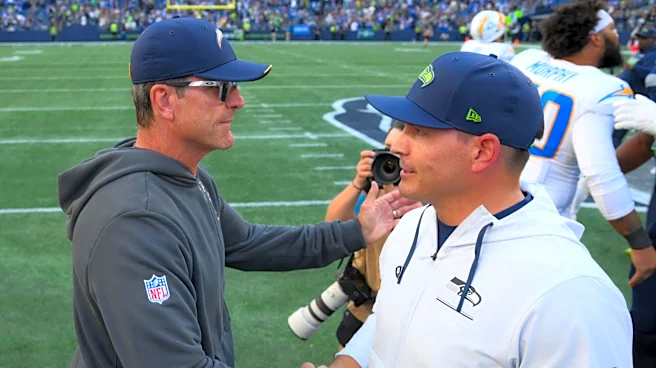
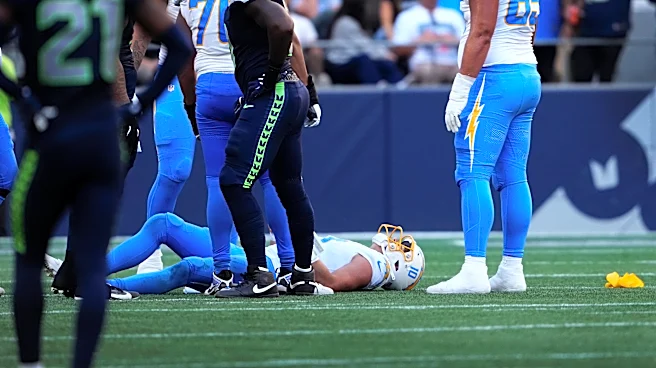
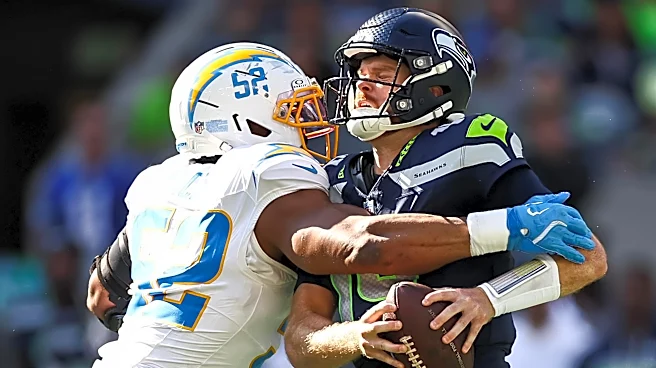
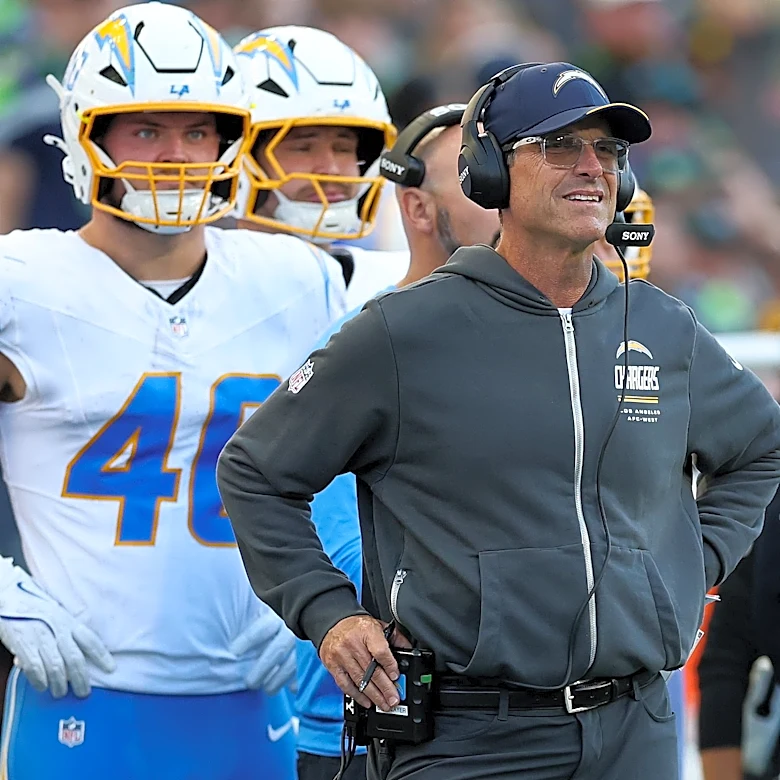
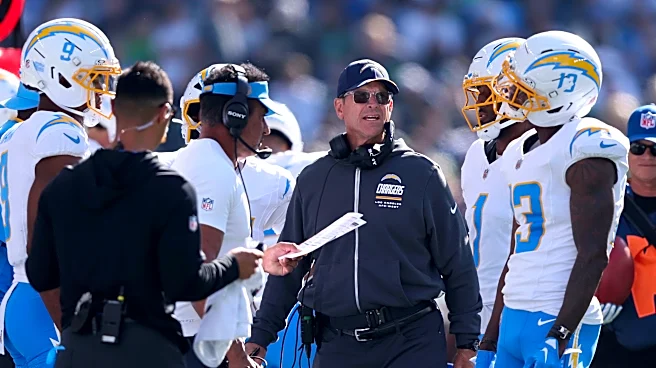
ESPN reporter Kris Rhim has publicly responded to Los Angeles Chargers head coach Jim Harbaugh, who labeled Rhim's question about quarterback Justin Herbert's protection as an 'insult.' During a Monday press conference, Rhim questioned Harbaugh about Herbert consistently
taking 'ruthless beatings' despite Harbaugh's initial charge to protect him. Rhim highlighted that Herbert is in his third consecutive season of being heavily hit and asked why he still needs to be a 'superhero' for the team to win. Harbaugh reacted with visible annoyance, stating the question sounded more like an insult than a legitimate inquiry, though he praised Herbert's competitive spirit. Rhim clarified that his intention was not to insult but to seek an explanation for the ongoing situation. Following the exchange, Rhim took to TikTok to defend his reporting and engaged with a user on Twitter (now X) who criticized his question.
Why It's Important?
This incident underscores the often-contentious relationship between sports journalists and professional coaches, particularly when teams are underperforming. For the Los Angeles Chargers, currently 0-4, the scrutiny on both the team's performance and coaching decisions is intensified. Harbaugh's defensive reaction to a question about player safety and team strategy could be interpreted in various ways, potentially affecting public perception of his leadership and transparency. For sports media, Rhim's steadfast defense of his journalistic integrity highlights the role of beat reporters in holding teams and coaches accountable, even when faced with pushback. The public nature of this disagreement, amplified by social media platforms like TikTok and Twitter, also reflects the evolving landscape of sports journalism and fan engagement, where direct interactions and immediate responses are increasingly common.
What's Next?
The immediate aftermath will likely involve continued discussion and debate within sports media circles regarding the appropriateness of both Rhim's question and Harbaugh's response. Fans and analysts will continue to monitor the Chargers' performance, especially regarding Justin Herbert's protection, which was the core of Rhim's inquiry. Depending on the team's future results, the pressure on Harbaugh to address these concerns effectively will either intensify or diminish. This interaction may also influence how other reporters approach Harbaugh in future press conferences, potentially leading to more cautious or, conversely, more assertive questioning. The incident could serve as a case study in sports journalism ethics and the dynamics of media-team relations.
Beyond the Headlines
Beyond the immediate spat, this event touches on broader themes within professional sports, including player welfare and the accountability of coaching staff. The repeated 'ruthless beatings' of a star quarterback like Justin Herbert raise questions about long-term career impacts and the strategic priorities of a franchise. It also highlights the inherent tension between a coach's desire to protect his team and narrative, and a journalist's duty to report on challenging realities. The use of social media by both the reporter to defend his work and by fans to engage in the debate illustrates how digital platforms have become integral to the sports news cycle, allowing for rapid dissemination of information and direct engagement, but also contributing to the polarization of discussions.