

What's Happening?
James Dolan, the executive chairman of Madison Square Garden and owner of the New York Knicks, has reportedly issued a mandate that the team avoid entering the second luxury tax apron. This directive is significantly impacting ongoing negotiations for
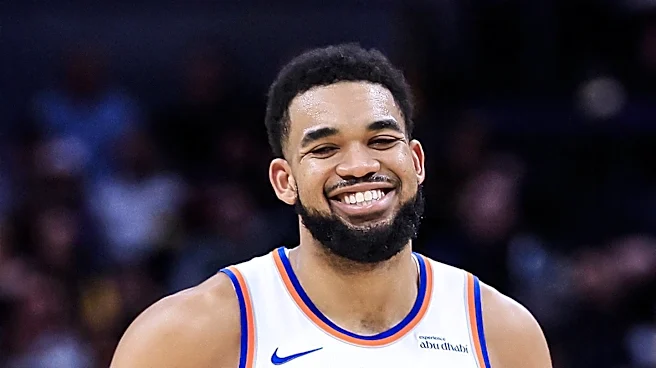
a contract extension with player Karl-Anthony Towns. Towns, 30, is eligible for a four-year extension worth approximately $276 million. However, due to Dolan's mandate, the Knicks' discussions with Towns are expected to be protracted and challenging. According to Sean Deveney of Heavy on Sports, the Knicks have presented Towns with the option of leaving in free agency if an agreement cannot be reached. Towns currently has two years remaining on his contract, with the final year being a player option, which means he could opt out at the end of the current season to become an unrestricted free agent. Stefan Bondy of The New York Post reported that Towns previously declined a $200 million extension offer from the Knicks, which was $77 million less than his maximum eligible amount and a pay cut from his current $57 million salary.
Why It's Important?
This situation highlights the significant influence of team ownership on player contracts and team financial strategy in the NBA. James Dolan's mandate to avoid the second luxury tax apron directly affects the Knicks' ability to retain key talent like Karl-Anthony Towns, who is a vital player for the team. The luxury tax system in the NBA is designed to penalize teams that spend excessively, and exceeding the second apron imposes severe restrictions on team building, including limitations on trades and draft picks. By adhering to this mandate, the Knicks aim to maintain financial flexibility and avoid future penalties, but it creates a dilemma in securing a star player. The outcome of these negotiations could set a precedent for how other NBA teams approach player extensions under similar financial constraints. Furthermore, the reported rejection of a $200 million offer by Towns, and the comparison to Jalen Duren's contract, underscores the escalating player salary expectations and the competitive market for top-tier talent in the league.
What's Next?
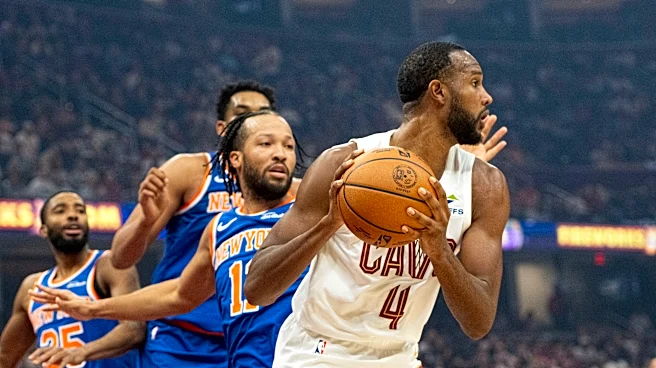
Negotiations between the New York Knicks and Karl-Anthony Towns are expected to continue throughout the season, with no immediate resolution anticipated. The Knicks will likely need to increase their offer beyond the previously rejected $200 million to secure Towns long-term, potentially aiming for a figure closer to the $220 million range, as suggested by an anonymous executive. The team also faces future financial considerations with other key players, including Josh Hart, who is extension-eligible, and Jalen Brunson, who will become extension-eligible next year. Brunson's previous team-friendly contract suggests he may seek a market-value deal this time, further complicating the Knicks' salary cap management. The possibility of Towns opting out of his contract at the end of the season and entering free agency remains a significant factor, as he would attract considerable interest from other teams. The team's performance in the current season and their championship defense will also play a role in how these contract discussions unfold.
Beyond the Headlines
The ongoing contract dispute between the New York Knicks and Karl-Anthony Towns, driven by owner James Dolan's financial mandate, reflects a broader tension in professional sports between competitive aspirations and fiscal responsibility. The NBA's collective bargaining agreement, particularly its luxury tax provisions, is designed to promote competitive balance, but it often forces teams to make difficult choices regarding player retention and salary cap management. This situation also brings to light the evolving landscape of player power in the league, where star athletes like Towns have significant leverage due to their market value and the potential for free agency. The comparison of Towns' potential contract to that of Jalen Duren highlights how player agents and athletes use market benchmarks to negotiate higher salaries, pushing the boundaries of team payrolls. The ethical implications for team owners involve balancing fan expectations for a winning team with the financial sustainability of the franchise, especially when mandates like Dolan's directly impact the ability to secure top talent.