

What's Happening?
UFC President Dana White has expressed significant interest in bringing a UFC event to Hawaii, a market he identifies as one of the organization's largest since its inception, despite never having hosted an event there. White noted that the primary obstacle
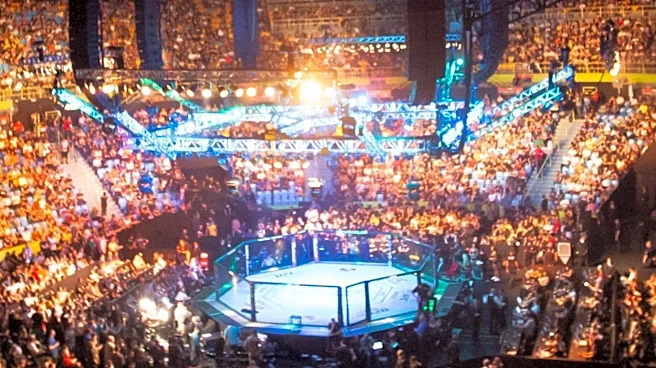
has historically been the lack of adequate infrastructure to support a major UFC event. However, this situation is set to change with the ongoing construction of a new arena in Hawaii, projected to be completed between 2028 and 2029. This development makes the prospect of a UFC Hawaii event more feasible. White did not specify whether the event would be a 'Fight Night' or a numbered pay-per-view, but he emphasized his desire to make it an unforgettable experience for attendees. The new venue, the New Aloha Stadium in Halawa, Oahu, is expected to accommodate at least 31,000 fans, providing the necessary capacity for a large-scale UFC production. White also highlighted Hawaii's history of producing multiple UFC world champions, such as Max Holloway and B.J. Penn, underscoring the state's deep connection to mixed martial arts.
Why It's Important?
Bringing a UFC event to Hawaii holds significant importance for both the UFC organization and the state. For the UFC, it represents the fulfillment of a long-standing goal to host an event in a key market that has historically been underserved due due to infrastructural limitations. This move could further expand the UFC's global reach and fan base, particularly in a region known for its strong martial arts culture and a history of producing top-tier fighters. Economically, a major UFC event could provide a substantial boost to Hawaii's tourism sector, attracting thousands of fans, media, and support staff, leading to increased revenue for local businesses, hotels, and transportation services. For the state of Hawaii, hosting such a high-profile international sporting event would elevate its profile as a destination capable of accommodating large-scale entertainment, potentially paving the way for other major events in the future. It also acknowledges the contributions of Hawaiian athletes to the sport, celebrating their legacy on home soil. The event would also serve as a testament to the success of the new arena project, showcasing its capabilities and justifying the investment in its construction.
What's Next?
The immediate next steps for a UFC Hawaii event are contingent on the completion of the new arena, which is anticipated between 2028 and 2029. Once the infrastructure is in place, the UFC will likely begin detailed planning, including assessing the optimal timing, event format (Fight Night or numbered event), and potential fight cards. White's comments suggest that the organization is eager to capitalize on the new venue as soon as it becomes available. Stakeholders in Hawaii, including tourism boards and local government, will likely engage with the UFC to facilitate the event, ensuring logistical support and maximizing its economic benefits. The success of this initial event could lead to Hawaii becoming a regular stop on the UFC calendar, further solidifying its position as a significant market for mixed martial arts. The UFC will also need to consider the broader landscape of MMA and its fighter roster at the time to curate an event that resonates with the local fanbase and a global audience.
Beyond the Headlines
Beyond the immediate economic and sporting implications, a UFC event in Hawaii carries deeper cultural and symbolic significance. Hawaii has a rich tradition of combat sports, and hosting the UFC would be a recognition of this heritage and the state's contribution to the sport of mixed martial arts. It could inspire a new generation of Hawaiian athletes, providing a tangible pathway to professional careers in MMA. The event could also serve as a cultural exchange, showcasing Hawaiian traditions and hospitality to a global audience, while also bringing the diverse world of UFC to the islands. The development of the new arena itself signifies a broader trend in sports and entertainment infrastructure, where states and cities invest in modern facilities to attract major events, boosting local economies and enhancing community pride. This move by the UFC also highlights the organization's strategic approach to market expansion, targeting regions with passionate fan bases and emerging infrastructure, rather than solely focusing on established hubs. The long-term impact could be a strengthened bond between the UFC and its Hawaiian fanbase, fostering continued growth and engagement in the region.