






What's Happening?
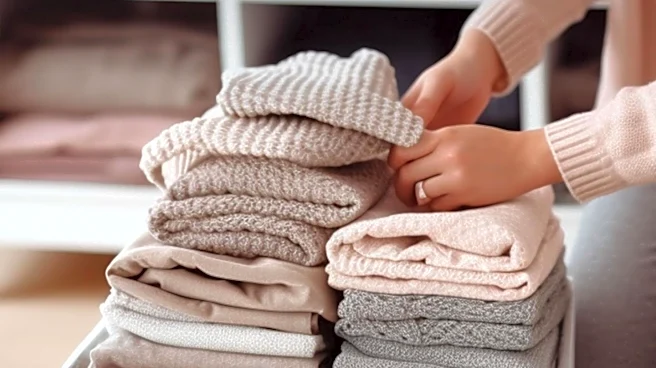
Quince Canada has issued advice on how to address shrunken sweaters and distinguish between shrinkage and felting. The company explains that shrinkage occurs when the knit tightens but individual stitches remain visible, a process that is often reversible.
In contrast, felting involves the permanent interlocking of wool fibers due to heat, moisture, and agitation, resulting in a dense, matted surface where stitches disappear, making it irreversible. To unshrink a sweater, Quince Canada recommends soaking it for approximately 30 minutes in cool water with a wool-safe conditioner, then gently pressing out excess water, rolling it in a towel, and reshaping it while drying flat. This method can recover most of the lost size. The primary causes of sweater shrinkage are identified as hot water, tumble drying, and vigorous agitation during washing.
Why It's Important?
This guidance from Quince Canada is important for consumers who frequently encounter issues with garment care, particularly with knitwear. Understanding the difference between shrinkage and felting can save consumers time and effort, as reversible shrinkage can be addressed with specific techniques, while felted items cannot be restored to their original state. For retailers and manufacturers, this information highlights common consumer challenges and underscores the importance of clear care instructions to prevent garment damage and customer dissatisfaction. The advice also promotes sustainable practices by encouraging the restoration of clothing rather than immediate disposal, which can reduce textile waste. Proper garment care extends the lifespan of clothing, benefiting both consumers and the environment.
What's Next?
Consumers are likely to apply these techniques to salvage shrunken sweaters, potentially reducing the need for replacements and fostering more informed garment care habits. Retailers in the apparel industry may consider incorporating similar detailed care advice into their product information or customer service resources to enhance customer satisfaction and reduce returns related to garment damage. The emphasis on gentle washing, cold water, and flat drying could become more widely adopted as consumers become more aware of these preventative measures. This could also lead to a greater demand for wool-safe conditioners and other specialized laundry products designed for delicate fabrics.
Beyond the Headlines
The distinction between shrinkage and felting touches upon the broader science of textile engineering and fiber properties. Wool fibers, with their microscopic scales, are particularly susceptible to felting under certain conditions, a characteristic that is sometimes intentionally exploited in felt-making. This information also highlights a common disconnect between consumer expectations and the realities of fabric care, underscoring the need for greater education on textile properties. The advice from Quince Canada contributes to a growing trend of consumer empowerment through knowledge, enabling individuals to make more informed decisions about their purchases and their care, ultimately promoting a more mindful approach to fashion and consumption.