






What's Happening?
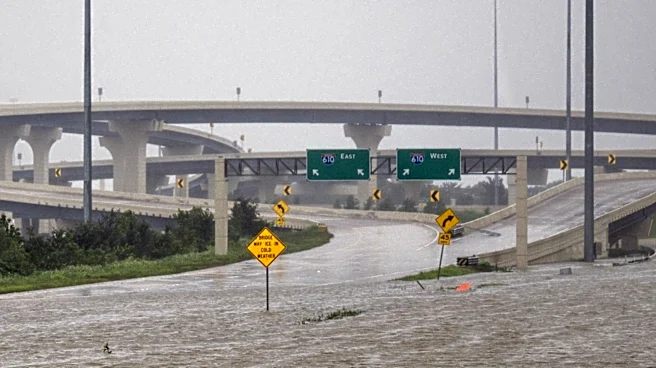
J.B. Hunt Transport Services experienced a notable decline in shipping volumes due to severe flooding in New Mexico and Arizona in late October. Executive Vice President Spencer Frazier stated at a conference that this disruption impacted the company's
transcontinental business by approximately 7,500 loads. The flooding caused damage to railroad infrastructure along Burlington Northern Santa Fe Railway (BNSF) routes, specifically a critical freight corridor connecting Southern California and the Midwest. Although BNSF managed to resume train operations within two and a half days, the initial delays cascaded through the intermodal system, resulting in at least a week of delays for shippers. Data from RailState, a container-tracking service, indicated that J.B. Hunt held the largest share of waiting intermodal containers during this period.
Why It's Important?
This event highlights the vulnerability of the U.S. supply chain and transportation infrastructure to extreme weather conditions. The disruption of a key freight route between Southern California and the Midwest underscores how localized natural disasters can have far-reaching economic consequences, affecting national logistics and delivery schedules. For J.B. Hunt, a major player in the transportation sector, the loss of 7,500 loads translates into significant financial impact and potential revenue loss. More broadly, such delays can lead to increased costs for businesses, potential shortages of goods, and ultimately, higher prices for consumers. It also emphasizes the critical role of railroad infrastructure in maintaining the flow of goods across the country and the need for robust contingency plans to mitigate the effects of unforeseen disruptions.
What's Next?
Following this disruption, J.B. Hunt and other affected logistics companies will likely be evaluating their supply chain resilience and contingency plans. This incident may prompt BNSF and other railway operators to assess and potentially reinforce infrastructure in flood-prone areas to prevent future occurrences. Shippers might also explore diversifying their transportation routes or modes to reduce reliance on single corridors. The financial impact on J.B. Hunt, as reflected in the 3.4% drop in shares, will be closely monitored by investors. Furthermore, the broader transportation industry may see increased discussions around climate change adaptation strategies for infrastructure and logistics, potentially leading to new investments in resilient systems and technologies to safeguard against similar disruptions.
Beyond the Headlines
The incident with J.B. Hunt and the BNSF railway points to a larger systemic issue: the increasing frequency and intensity of extreme weather events due to climate change are posing significant threats to critical national infrastructure. Beyond the immediate financial losses and logistical headaches, these disruptions can erode confidence in supply chain reliability, potentially influencing long-term investment decisions and manufacturing locations. It also raises questions about the adequacy of current infrastructure maintenance and upgrade cycles in the face of evolving environmental challenges. The ripple effect of such delays can extend to various sectors, from retail to manufacturing, underscoring the interconnectedness of the modern economy and the urgent need for a national strategy to enhance infrastructure resilience against climate impacts.