

What's Happening?
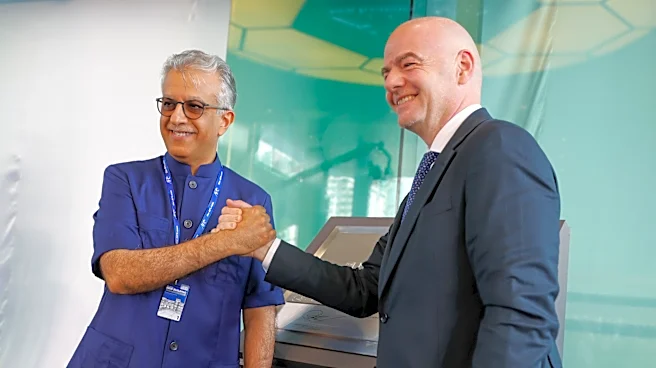
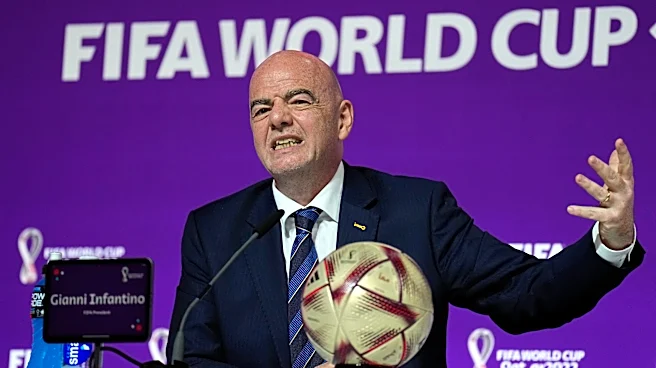
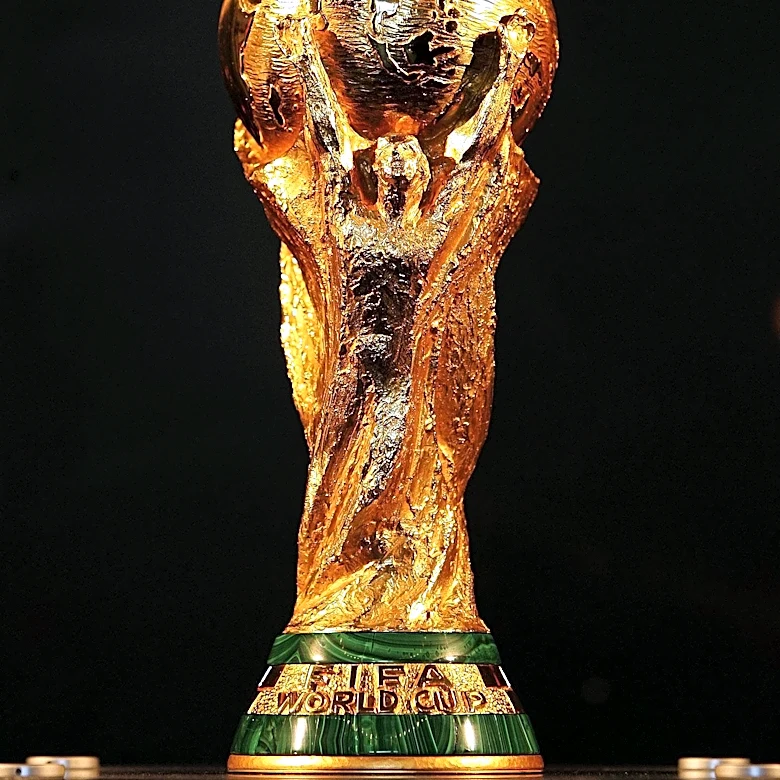
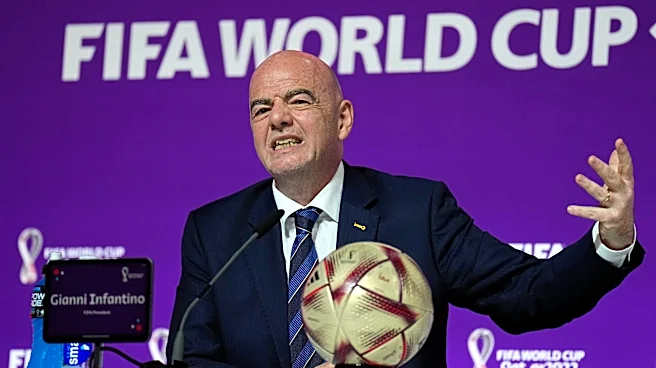
FIFA President Gianni Infantino has decided to abandon his controversial plan to sell World Cup profits to private equity investors following widespread opposition from various soccer organizations. The proposal involved creating a $20 billion company
to manage the World Cup, with private investors, including the Kushner family, holding a stake. The plan faced significant backlash from UEFA, CONCACAF, and the Asian Football Confederation, all of which opposed the move. Infantino's senior adviser, Carlos Cordeiro, resigned in protest, urging other FIFA officials to voice their concerns. The proposal's failure has raised questions about Infantino's leadership and future within FIFA.
Why It's Important?
The decision to abandon the private equity plan is significant as it highlights the resistance within the soccer community to commercialize the World Cup, a tournament with deep cultural and historical significance. The backlash underscores the importance of maintaining the integrity and ownership of the World Cup within the soccer community, rather than allowing private investors to influence its operations. This development could impact Infantino's leadership, as it reflects broader dissatisfaction with his management style and decision-making processes. The incident may also influence future governance and commercial strategies within FIFA.
What's Next?
Following the abandonment of the private equity plan, FIFA will need to reassess its commercial strategies and governance practices. Infantino's leadership may face increased scrutiny, and there could be calls for more transparency and inclusivity in decision-making processes. The upcoming FIFA presidential election could see challenges to Infantino's position, especially if dissatisfaction with his leadership continues to grow. Additionally, FIFA may explore alternative ways to generate revenue while ensuring that the World Cup remains under the control of the soccer community.