


What's Happening?
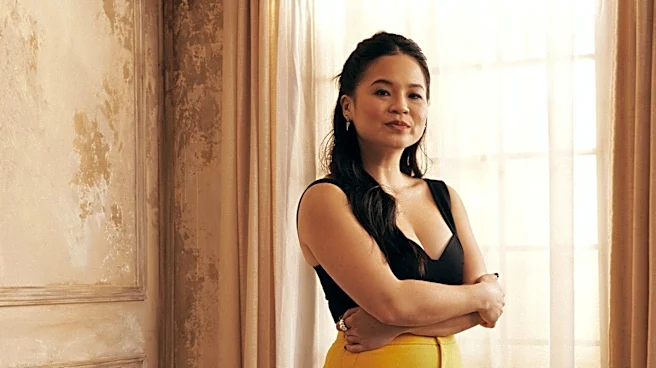
Kelly Marie Tran has achieved a significant milestone by voicing Disney’s first Southeast Asian Princess, Raya, in the animated film 'Raya and the Last Dragon.' The movie premiered to critical acclaim in March 2021. Beyond her voice acting role, Tran has also
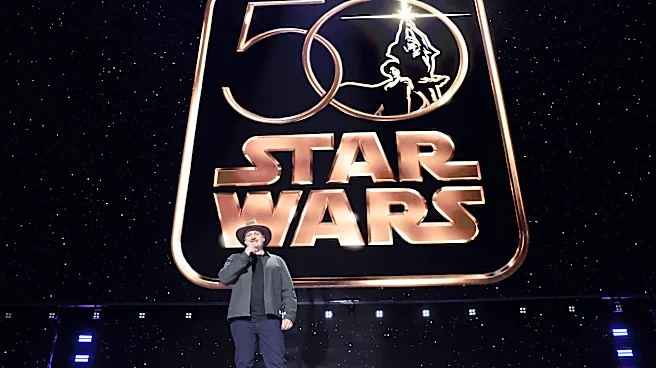
taken on executive producer duties for two notable projects. One is 'Lily Topples the World,' a documentary feature that won the Grand Jury Prize at SXSW, chronicling the life of an American-Chinese adoptee who became a global artistic sensation with over a billion YouTube views. The second is 'Summertime,' a spoken-word poetry feature film directed by Carlos López Estrada, which debuted at the 2020 Sundance Film Festival. Tran's career also includes her big-screen debut in 2017 as Rose Tico in 'Star Wars: Episode VIII: The Last Jedi,' where she made headlines as the first Asian-American woman cast in a lead role for the franchise, a role she reprised in 'Star Wars: Episode IX: The Rise of Skywalker' in 2019. Her additional credits span various platforms, including DreamWorks’ 'The Croods: A New Age,' Hulu’s 'Monsterland,' and Facebook Watch’s 'Sorry for Your Loss.'
Why It's Important?
Kelly Marie Tran's role as Raya in 'Raya and the Last Dragon' is profoundly important for representation in mainstream media, particularly for the Southeast Asian community in the U.S. and globally. By portraying Disney's first Southeast Asian princess, Tran helps to break down cultural barriers and provides a powerful role model for young audiences who may not have seen themselves reflected in such prominent animated characters before. This move by Disney signifies a broader industry shift towards more inclusive storytelling, which can influence public perception and foster greater understanding and appreciation of diverse cultures. Her previous groundbreaking role as the first Asian-American woman in a lead role in the 'Star Wars' franchise further underscores her impact on challenging traditional casting norms in Hollywood. These roles not only elevate her career but also pave the way for other diverse talents, demonstrating that representation can lead to both critical and commercial success. Her executive producer roles also highlight her growing influence behind the scenes, enabling her to shape narratives and support projects that resonate with diverse audiences.
What's Next?
The success of 'Raya and the Last Dragon' and Kelly Marie Tran's continued involvement in diverse projects suggest a positive trajectory for increased representation in Hollywood. Following the critical acclaim of 'Raya and the Last Dragon,' there is potential for more animated features to explore rich cultural narratives from various underrepresented communities. Tran's executive producer roles indicate a growing trend of actors taking more control over the content they create, which could lead to a wider array of stories being told. Her continued presence in high-profile films and series, coupled with her behind-the-scenes work, is likely to inspire other Asian-American artists and creators to pursue their ambitions in the entertainment industry. This sustained effort towards diversity and inclusion could lead to a more equitable and representative media landscape in the long term, influencing future casting decisions, storytelling approaches, and production investments across the U.S. entertainment sector.
Beyond the Headlines
Kelly Marie Tran's career trajectory, particularly her role as Raya, extends beyond mere entertainment; it touches upon significant cultural and societal implications. Her visibility as a leading Asian-American actress in major franchises like 'Star Wars' and Disney animation challenges long-standing stereotypes and biases within the entertainment industry. This representation can have a profound psychological impact on young audiences, fostering a sense of belonging and validating their identities. It also encourages a more nuanced understanding of different cultures among broader audiences, potentially reducing prejudice and promoting empathy. The industry's embrace of such diverse narratives reflects a growing demand from consumers for authentic and inclusive content, pushing studios to re-evaluate their creative strategies. This shift could lead to a permanent change in how Hollywood approaches character development, casting, and storytelling, moving towards a more globally representative and culturally sensitive approach. Her work also highlights the importance of diverse voices not just in front of the camera, but also in executive and creative roles, ensuring that stories are told with authenticity and respect.