





What's Happening?
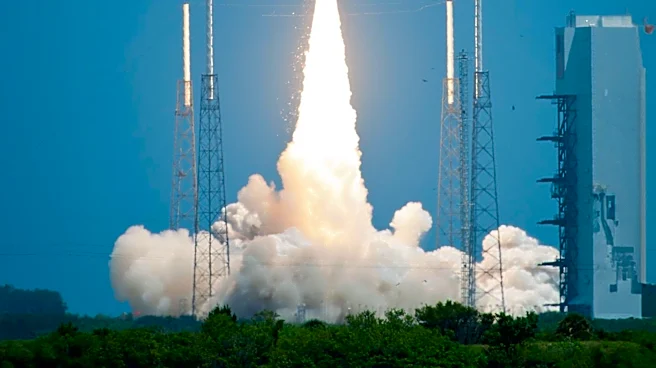
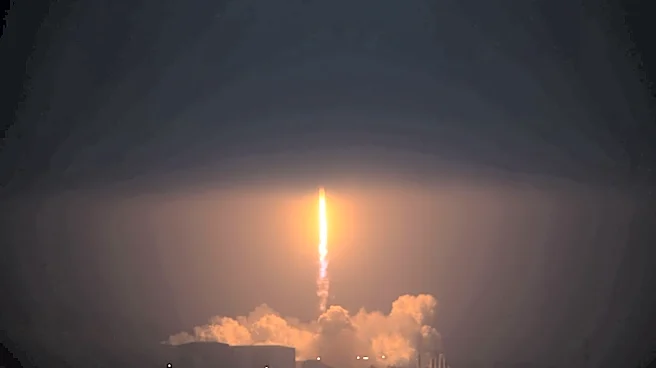
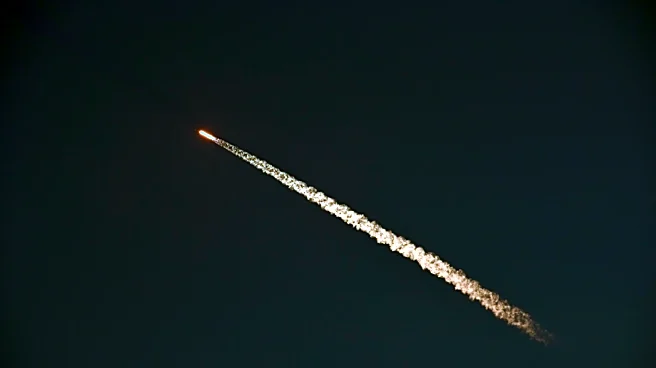
SpaceX successfully launched a Falcon 9 rocket from Space Launch Complex 40 at Cape Canaveral, deploying three AST SpaceMobile BlueBird Block 2 satellites into low Earth orbit. The launch marks the 30th flight for the booster, which landed on the A Shortfall
of Gravitas droneship in the Atlantic Ocean. The BlueBird satellites are designed to provide direct-to-cell broadband service to standard smartphones, enhancing global connectivity. This launch is part of SpaceX's ongoing efforts to expand its satellite network and improve communication infrastructure.
Why It's Important?
The deployment of BlueBird satellites represents a significant advancement in satellite technology, offering direct-to-cell connectivity without the need for specialized hardware. This capability can revolutionize mobile communication, particularly in remote and underserved areas, by providing reliable internet access. SpaceX's successful reuse of the Falcon 9 booster demonstrates the efficiency and cost-effectiveness of its reusable launch architecture, which is crucial for maintaining high launch cadence and reducing space exploration costs. The launch contributes to SpaceX's goal of establishing a comprehensive satellite network that supports global communication and internet access.
What's Next?
SpaceX plans to continue its high-cadence launch strategy, with another Falcon 9 mission scheduled from the same pad on August 10. This upcoming launch will carry 29 Starlink V2 Mini satellites, further expanding SpaceX's satellite constellation. The rapid turnaround capability of Space Launch Complex 40 is central to SpaceX's operations, enabling frequent launches and quick recovery of boosters. As SpaceX continues to deploy satellites, it will enhance its global coverage network, providing improved internet access and communication services worldwide.