



What's Happening?
Amazon is significantly expanding its Prime Air drone delivery service, aiming to cover nearly 500 cities and towns across the U.S. by the end of 2026. This expansion represents a sixfold increase in its current coverage. The service, which currently
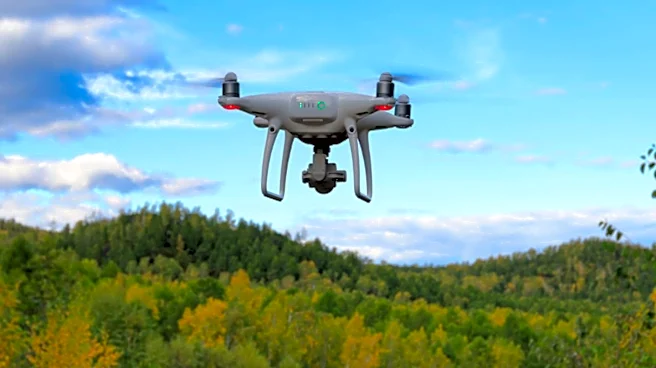
operates in seven states including Arizona, Florida, Kansas, Louisiana, Michigan, Nebraska, and Texas, plans further launches in Georgia, Idaho, Illinois, New York, and Ohio. Prime Air delivers a wide range of products, such as groceries, household goods, electronics, cosmetics, and certain medications, typically within 30 to 60 minutes of an order being placed. Eligible items must weigh five pounds or less and fit within a large shoebox, encompassing over 60% of Amazon's most frequently purchased products. The company emphasizes its 'detect-and-avoid' system for continuous airspace monitoring and real-time in-flight decisions, utilizing onboard cameras and sensors for navigation and obstacle detection without tracking individuals or recording movements. This drone service integrates with Amazon's existing shopping app and customer service systems and holds Federal Aviation Administration certification.
Why It's Important?
This aggressive expansion of Amazon's drone delivery service could significantly reshape the U.S. retail and logistics landscape. For consumers, it promises 'ultrafast' delivery, potentially setting new expectations for convenience and speed in e-commerce, especially for everyday essentials and last-minute purchases. This could put pressure on traditional retail and other delivery services to innovate and accelerate their own delivery capabilities. Economically, the expansion could create new jobs in drone operations, maintenance, and logistics, while also potentially impacting local delivery businesses. The increased efficiency in delivery could reduce transportation costs for Amazon, potentially leading to more competitive pricing. Furthermore, the widespread adoption of drone delivery could alleviate traffic congestion and reduce carbon emissions associated with traditional vehicle-based deliveries in urban and suburban areas. However, it also raises questions about airspace management, noise pollution, and the potential impact on local infrastructure, which will require careful consideration and regulatory oversight.
What's Next?
Amazon's immediate next steps involve launching Prime Air in additional states, including Georgia, Idaho, Illinois, New York, and Ohio, as part of its plan to reach nearly 500 U.S. locations by 2026. The company will likely continue to refine its 'detect-and-avoid' technology and drone models to enhance safety and efficiency. Regulatory bodies, particularly the Federal Aviation Administration (FAA), will play a crucial role in overseeing this expansion, potentially developing new guidelines or adapting existing ones to accommodate the increased volume of commercial drone traffic. Competitors in the retail and logistics sectors will likely monitor Amazon's progress closely, potentially accelerating their own drone or automated delivery initiatives to remain competitive. Public perception and acceptance of widespread drone activity will also be a key factor, with Amazon needing to address concerns regarding privacy, noise, and safety to ensure smooth integration into communities.
Beyond the Headlines
The widespread deployment of drone delivery by Amazon could have profound long-term implications beyond immediate logistical benefits. Ethically, the use of drones for delivery raises questions about privacy, despite Amazon's claims that cameras are not used to track individuals. The sheer volume of drones in the sky could lead to concerns about visual pollution and the changing aesthetic of urban and suburban environments. Legally, the expansion will likely necessitate a more robust and comprehensive regulatory framework for drone operations, potentially influencing future air traffic control systems and liability laws. Culturally, the normalization of drone delivery could further entrench the expectation of instant gratification in consumer behavior, potentially altering shopping habits and local commerce dynamics. This shift could also highlight the growing reliance on automated systems, prompting broader discussions about the future of work and the role of human labor in the delivery sector.