





What's Happening?
The Cleveland Browns have undertaken a significant overhaul of their offensive line following a disappointing 2025 season where the unit was considered one of the worst in the NFL. Executive Vice President of Football Operations Andrew Berry spearheaded
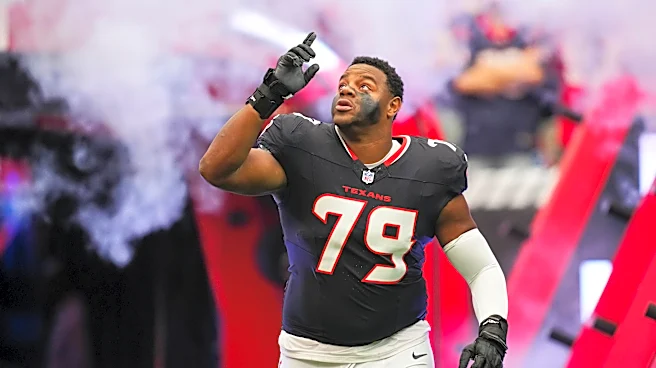
the changes, which included trading for tackle Tytus Howard from the Houston Texans, signing free agents Zion Johnson and Elgton Jenkins, and drafting Spencer Fano. Despite these efforts, NFL analysts have set low expectations for the revamped line, ranking it 30.5 overall in a composite list from various outlets. The Browns' new head coach, Todd Monken, has indicated that four of the five starting positions are nearly settled, with the final spot to be determined during training camp.
Why It's Important?
The performance of the Cleveland Browns' offensive line is crucial for the team's success in the upcoming season. A strong offensive line is essential for protecting the quarterback and establishing a successful running game. The Browns' decision to completely revamp their line reflects a strategic move to address these critical areas. However, the low rankings from NFL pundits suggest skepticism about the effectiveness of these changes. If the new line fails to perform, it could impact the team's overall competitiveness and playoff aspirations. Conversely, if the line exceeds expectations, it could significantly enhance the Browns' offensive capabilities and prove critics wrong.
What's Next?
The Browns will continue to evaluate their offensive line during training camp and preseason games. The final composition of the starting line will be determined based on performance and chemistry among the players. The team will need to focus on building communication and cohesion within the line to ensure effective protection and blocking. The upcoming season will be a test of whether the Browns' strategic overhaul can translate into on-field success. Observers will be watching closely to see if the new lineup can improve the team's offensive performance and alter the current low expectations.