




What's Happening?
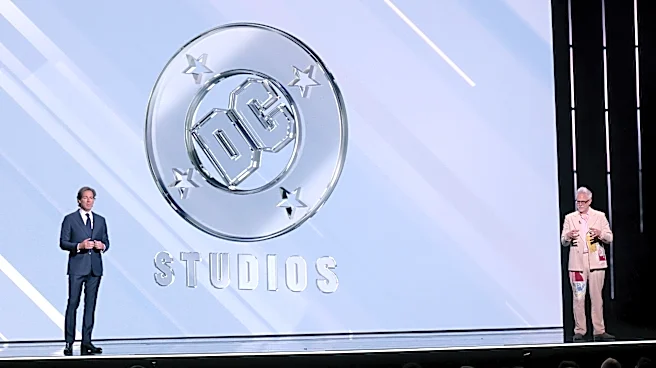
James Gunn and Peter Safran are stepping down as co-chairs and co-CEOs of DC Studios, effective December 1, after a four-year tenure. Their departure comes as a surprise, especially since they were recently included in Skydance's leadership team following
its acquisition of Warner Bros. Discovery. Gunn and Safran were appointed in late 2022 with the mandate to rebuild DC's film and television universe. Among their initial decisions was the cancellation of 'Wonder Woman 3,' which was in development with director Patty Jenkins and actress Gal Gadot, and a broader move away from previous era stars like Henry Cavill as Superman. They will be replaced by former Marvel Studios executive Jeremy Latcham, who will serve as president and chief creative officer.
Why It's Important?
This leadership change signifies a major shift in the strategic direction of DC Studios and the broader U.S. entertainment landscape. Gunn and Safran's initial mandate was to revitalize the DC universe to compete with Marvel, and their departure suggests that the studio's trajectory may be re-evaluated. The cancellation of 'Wonder Woman 3' and the rebooting of the franchise without established stars were controversial decisions that impacted key talent like Gal Gadot. The appointment of Jeremy Latcham, with his Marvel background, indicates a potential new creative vision and approach to franchise building, which could significantly alter DC's competitive position in the superhero film market and affect numerous industry stakeholders, from filmmakers to actors and production crews.
What's Next?
Jeremy Latcham's appointment as president and chief creative officer of DC Studios signals a new era for the franchise. Given his experience with successful Marvel films, it is likely that DC will undergo another strategic re-evaluation, potentially leading to new creative directions, casting decisions, and production slates. The industry will be watching closely to see how Latcham's leadership impacts the development of future DC projects and whether he will revisit any of the decisions made by his predecessors, such as the 'Wonder Woman' franchise. This transition could also influence talent relationships and overall studio culture, as a new leader often brings a fresh perspective on how to manage creative properties and engage with talent.
Beyond the Headlines
The frequent leadership changes and strategic reboots within DC Studios highlight a deeper challenge in Hollywood: the difficulty of establishing a consistent and successful cinematic universe in an increasingly competitive market. The decision to cancel 'Wonder Woman 3' and move away from established stars reflects a broader industry trend of studios prioritizing long-term franchise vision over individual character arcs or actor continuity. This constant flux can create uncertainty for talent and creative teams, impacting morale and potentially leading to a more cautious approach to long-term commitments. The ongoing struggle to define DC's identity in the shadow of Marvel's success also raises questions about creative control, corporate strategy, and the balance between artistic vision and commercial viability in blockbuster filmmaking.