




What's Happening?
Aritzia, a Vancouver-based fashion retailer, is expanding its presence in the United States through its direct-to-consumer model, offering what it terms 'everyday luxury.' The company designs and markets its own exclusive brands, such as Wilfred, Babaton,
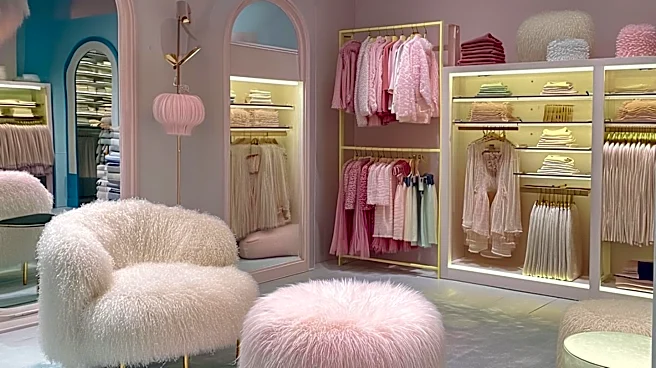
TNA, and Super Puff, through its own boutiques and e-commerce platform. This strategy allows Aritzia to maintain full control over product design, pricing, and the overall customer experience. By avoiding wholesale partners, the brand protects its image from inconsistent presentation or discounting, which in turn supports stronger gross margins compared to traditional apparel retailers. The U.S. has become a significant growth market for Aritzia, with new boutiques opening in major cities and suburban shopping centers, contributing a large share of its revenue. The company's physical stores are designed as immersive spaces that attract new customers and foster loyalty, often leading to increased engagement and purchases through digital channels.
Why It's Important?
Aritzia's expansion in the U.S. market highlights a growing trend in the retail industry towards direct-to-consumer (DTC) models, which can significantly impact traditional retail landscapes. By controlling the entire customer relationship, Aritzia avoids sharing margins with wholesalers, leading to potentially higher gross margins and greater pricing control. This model also provides valuable direct data on customer preferences, enabling the company to refine products and marketing strategies more effectively. For U.S. consumers, this means access to a brand that offers high-quality, fashionable clothing at a price point below traditional luxury brands, potentially shifting consumer expectations for value and experience in the apparel sector. The success of Aritzia's boutique strategy, where physical stores enhance online sales and brand engagement, demonstrates the continued importance of brick-and-mortar retail, even in a digitally-driven market, influencing how other brands might approach their own omnichannel strategies.
What's Next?
Aritzia is expected to continue its strategic expansion within the U.S. market, with further boutique openings and targeted digital marketing efforts in new regions. This sustained growth trajectory will likely involve ongoing investments in its e-commerce platform, including website functionality, mobile experience, and fulfillment capabilities, to enhance convenience for its North American customer base. The company will also likely continue to leverage social media and influencer partnerships to build brand awareness, particularly among younger demographics who often discover brands online before visiting physical stores. Managing inventory effectively will remain crucial to balance trend-driven pieces with core items, avoiding excessive discounting or missed sales opportunities. As Aritzia deepens its footprint, it will need to navigate the competitive landscape of American retail and ensure consistent execution to maintain its brand image and customer loyalty.
Beyond the Headlines
Aritzia's 'everyday luxury' positioning and vertically integrated direct-to-consumer model represent a broader shift in consumer expectations and retail dynamics. This approach challenges the traditional luxury market by making high-quality, fashionable items more accessible, potentially democratizing access to premium aesthetics. The emphasis on immersive boutique experiences, coupled with a robust digital presence, underscores the evolving role of physical retail as a brand-building and engagement tool rather than solely a sales channel. This model also raises questions about sustainability and ethical sourcing within the fashion industry, as direct control over the supply chain could allow for greater transparency and accountability, though the source does not explicitly detail Aritzia's practices in this area. The success of such models could inspire other brands to re-evaluate their distribution strategies, potentially leading to a more fragmented but consumer-centric retail environment where brand loyalty is cultivated through direct relationships and consistent brand messaging.