






What's Happening?
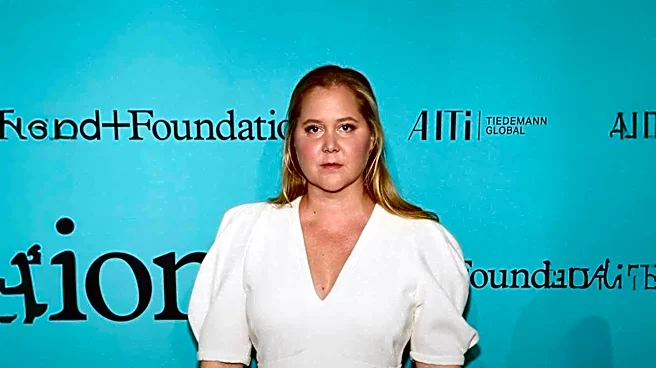
Comedian Amy Schumer recently attended the Good+ Foundation's 'A Very Good Night of Comedy' benefit gala in New York City, where she displayed a 50-pound weight loss. Schumer wore a bright pink, fitted mini dress that highlighted her slimmer figure. This
public appearance follows her candid discussions about her weight loss journey and her use of GLP-1 medications. She previously experienced adverse side effects from Ozempic and Wegovy but reported a more positive experience with Mounjaro, which she began taking to manage her health. Schumer has stated she has maintained a weight of 150 pounds for a year and feels well. Her look at the event, described as Barbie-inspired, featured a square neckline, three-quarter-length sleeves, and was complemented by pink heels. The event itself was a star-studded affair at the Beacon Theatre, raising funds for a nonprofit supporting families in need, with performances from various comedians.
Why It's Important?
Amy Schumer's public disclosure of her weight loss and the medication she used contributes to a broader conversation about GLP-1 drugs like Mounjaro, Ozempic, and Wegovy. Her experience highlights the varying efficacy and side effect profiles of these medications among individuals, potentially influencing public perception and patient choices. As a prominent public figure, Schumer's openness can destigmatize the use of such medications for weight management and health, encouraging more open dialogue between patients and healthcare providers. The positive fan reactions to her transformation also reflect a societal interest in health and wellness journeys, particularly when shared by celebrities. This trend can impact the pharmaceutical market for weight loss drugs, potentially increasing demand and further research into personalized treatment approaches.
What's Next?
The continued public discussion around Amy Schumer's weight loss journey and her positive experience with Mounjaro may lead to increased public interest and potentially higher demand for GLP-1 medications. Pharmaceutical companies producing these drugs might see a boost in visibility and sales, especially as more public figures share their experiences. Healthcare providers may face more inquiries from patients interested in these treatments, necessitating further education and careful patient selection. Additionally, the ongoing conversation could prompt more research into the long-term effects, optimal usage, and individual responses to different GLP-1 medications, aiming to improve patient outcomes and minimize side effects. The broader entertainment industry might also see more celebrities openly discussing their health and wellness strategies, further normalizing these conversations.
Beyond the Headlines
Amy Schumer's narrative extends beyond a simple weight loss story; it touches upon the evolving landscape of health management and body image in the public eye. Her willingness to discuss her struggles with side effects from certain medications before finding one that worked for her underscores the personalized nature of medical treatments and challenges the often-oversimplified narratives surrounding weight loss. This transparency can foster a more realistic understanding of health journeys, moving away from quick-fix perceptions. Ethically, it raises questions about the influence of celebrity endorsements on medical choices and the responsibility of public figures when discussing health interventions. Culturally, it reflects a shift towards greater openness about personal health challenges, potentially empowering others to seek medical help and discuss their own health journeys without shame.