





What's Happening?
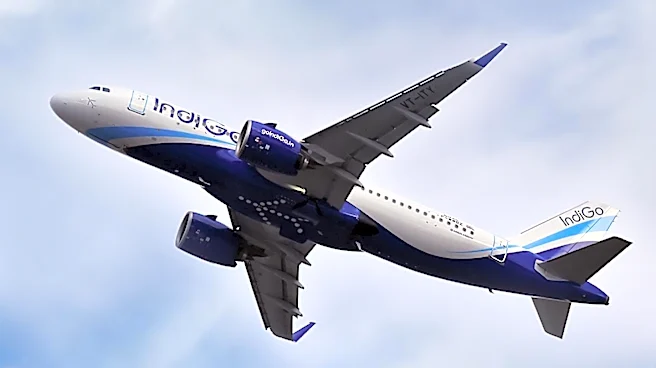
IndiGo, a prominent airline, is experiencing substantial financial setbacks, reporting a loss of approximately INR 19 billion ($197 million) in the September quarter. This downturn is primarily attributed to a significant 67% increase in fuel costs, which
has outpaced the airline's 26% revenue growth. In response to these financial pressures and strategic adjustments, IndiGo has terminated its lease for a Norse Atlantic 787 aircraft and has temporarily suspended its flights to Heathrow. The airline's plans for international expansion are proceeding, but with modifications; the first of 60 new A350 aircraft, crucial for its long-haul ambitions, is now anticipated to arrive in the second quarter of 2028, a revised timeline from previous expectations. Despite these challenges, IndiGo aims to expand its international footprint while maintaining its established low-cost operational model.
Why It's Important?
IndiGo's financial struggles and strategic adjustments highlight the volatile nature of the airline industry, particularly concerning fuel price fluctuations and their direct impact on profitability. The substantial loss reported by a major carrier like IndiGo can signal broader economic pressures within the aviation sector, potentially affecting investor confidence and future growth projections for other airlines. The decision to suspend Heathrow flights and delay the arrival of new long-haul aircraft could impact competitive dynamics in international routes, potentially creating opportunities or challenges for rival carriers. Furthermore, the airline's commitment to its low-cost model amidst these financial headwinds underscores the ongoing consumer demand for affordable air travel, which could influence pricing strategies across the industry. The delay in receiving new aircraft also has implications for manufacturing and supply chain partners, potentially affecting their production schedules and financial outlooks.
What's Next?
IndiGo will likely focus on mitigating the impact of high fuel costs through operational efficiencies and potential adjustments to its fare structure, though it aims to maintain its low-cost model. The airline will need to manage its fleet strategy carefully, especially with the delayed arrival of the A350s, which are central to its international expansion. This could involve exploring alternative short-term leasing options or optimizing existing routes to maximize profitability. Stakeholders, including investors and industry analysts, will closely monitor IndiGo's financial performance in upcoming quarters to assess the effectiveness of its cost-control measures and its ability to navigate the challenging economic environment. The airline's continued pursuit of international expansion, despite current setbacks, suggests a long-term strategic vision that will require careful execution and adaptation to market conditions.
Beyond the Headlines
The challenges faced by IndiGo extend beyond immediate financial figures, touching upon the broader sustainability of the low-cost carrier model in an era of unpredictable global fuel prices and supply chain disruptions. The delay in aircraft deliveries, a common issue across the aviation industry, highlights the complex interdependencies within the global manufacturing and logistics networks. This situation could prompt a re-evaluation of long-term fleet planning and risk management strategies for airlines worldwide. Moreover, the airline's commitment to international expansion, even with delays, reflects a strategic pivot towards capturing a larger share of global air travel, potentially reshaping competitive landscapes and consumer expectations for affordable long-haul flights. The balancing act between maintaining low fares and ensuring profitability in a high-cost environment will be a critical test for IndiGo and a case study for the industry.