








What's Happening?
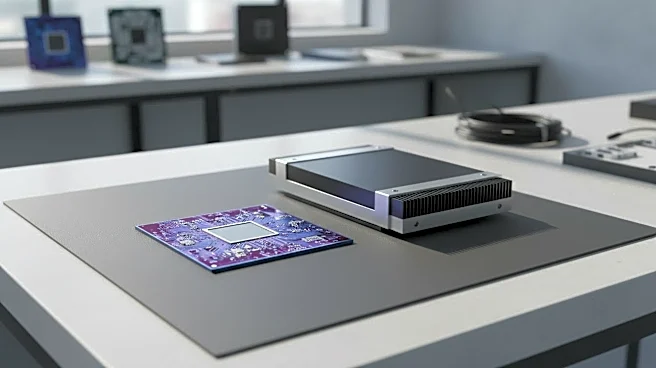
Meta Platforms is set to commence the production of its artificial intelligence chip, code-named 'Iris', in September. This initiative is part of Meta's strategy to increase its computing power to 14 gigawatts by next year. The chip is a component of a four-generation
project known as Meta Training and Inference Accelerators (MTIA), which the company is designing in-house. The development of the chip, which took only six weeks of testing without major issues, marks a significant step forward for Meta's internal efforts that have been ongoing for over five years. The chip is designed to enhance the AI capabilities of Meta's social media platforms, Facebook and Instagram. Meta is collaborating with Broadcom for design assistance and Taiwan Semiconductor Manufacturing Co for production. The company aims to reduce its reliance on external chip suppliers like Nvidia and AMD, thereby lowering computing costs.
Why It's Important?
The production of the Iris chip is a critical development for Meta as it seeks to bolster its AI infrastructure and reduce dependency on external suppliers. This move is expected to significantly cut costs associated with purchasing large quantities of GPUs from companies like Nvidia and AMD. By developing its own chips, Meta can tailor its technology to better suit its specific needs, potentially leading to more efficient and powerful AI applications. The initiative is part of a broader trend among tech giants to invest heavily in AI infrastructure, with Meta planning to spend up to $145 billion on AI this year. This investment is a substantial portion of the over $700 billion that major tech companies are projected to spend on AI technology, highlighting the growing importance of AI in the tech industry.
What's Next?
Meta plans to launch a new AI chip approximately every six months through 2027, a more aggressive timeline compared to the typical annual release cycle of AI chips by other firms. The company also intends to deploy seven gigawatts of computing infrastructure this year, with plans to double that capacity by 2027. To support this expansion, Meta has secured long-term supply agreements with companies like Samsung Electronics for memory chips and Sandisk for flash storage. These agreements are crucial in the face of a global memory chip shortage, which has led to increased prices and supply chain challenges. As Meta continues to expand its AI capabilities, it will likely influence the broader tech industry's approach to AI infrastructure development.