




What's Happening?
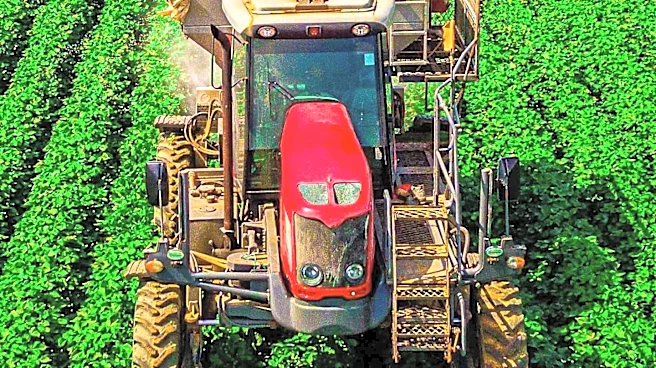
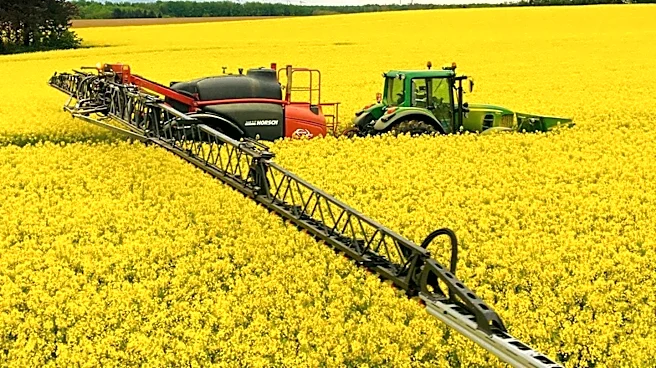
Farm-ING, an Austrian company, has introduced a new 12-metre spot sprayer designed for precision agriculture. The SpotSprayING system uses advanced camera and software technology to identify and target specific weeds, minimizing chemical use and environmental
impact. The sprayer can cover approximately 4 hectares per hour and is capable of distinguishing between crop plants and weeds, allowing for targeted application of herbicides. This innovation is part of a growing trend towards precision farming, which aims to increase efficiency and sustainability in agriculture. The SpotSprayING system is noted for its high drift reduction classification, making it one of the most efficient in its class.
Why It's Important?
The introduction of Farm-ING's spot sprayer represents a significant advancement in agricultural technology, offering farmers a tool to reduce chemical usage and improve crop yields. By targeting only the necessary areas, the sprayer helps decrease environmental impact and operational costs. This technology aligns with global efforts to promote sustainable farming practices and could lead to widespread adoption of precision agriculture techniques. For the agricultural sector, such innovations are crucial in addressing challenges related to food security, resource management, and environmental conservation. The SpotSprayING system could set a new standard for efficiency and sustainability in farming.
What's Next?
As Farm-ING's spot sprayer enters the market, it is expected to attract interest from farmers and agricultural businesses looking to enhance their operations. The company plans to continue developing the technology, expanding its capabilities to recognize more crop types and improve accuracy. This could lead to broader adoption and potentially influence regulatory standards for pesticide application. Additionally, competitors may accelerate their own innovations in response, driving further advancements in precision agriculture. Stakeholders will likely watch the market response closely, as successful integration could transform agricultural practices globally.