







What's Happening?
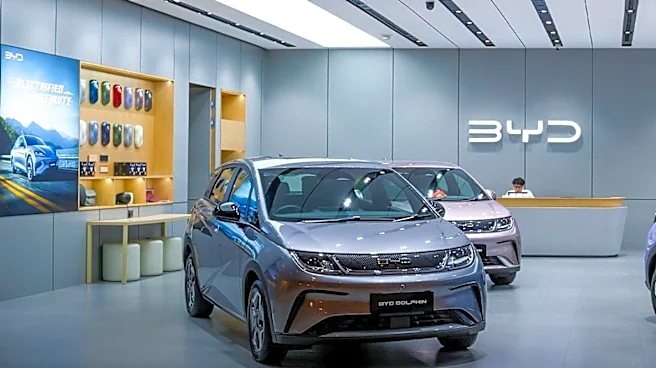
BYD Company Limited Class H (002594) announced a 30% increase in its Q2 net profit, reaching approximately RMB 8.2 billion, despite a 7.1% decline in revenue to RMB 344.8 billion. The company's gross profit stood at RMB 65.0 billion, with an overall gross margin
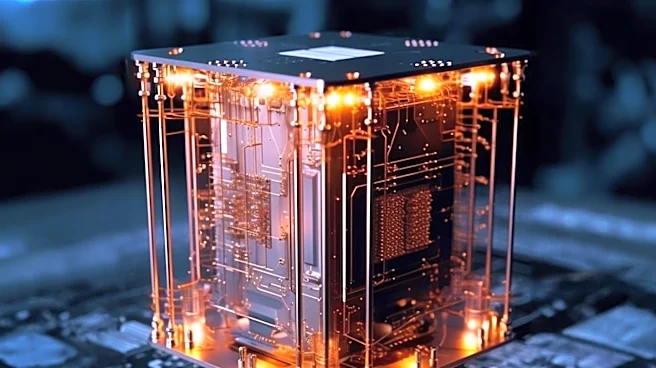
of 18.85% and an overseas margin of 22%. This financial performance comes as BYD actively pursues global expansion, including potential acquisition of a Stellantis manufacturing plant in Canada, as reported by Bloomberg. The report, however, has not been independently verified. Additionally, BYD is increasing production in Brazil, initiating Oman Ro-Ro shipments, and investing in chip design and robotics to support its smart-vehicle development and automation growth. The company's long-standing investment in chip design and manufacturing aligns with China's strategic push for semiconductor self-reliance, supporting its smart-vehicle development and emerging physical AI applications, according to Dow Jones Newswires.
Why It's Important?
BYD's strategic moves are significant for the U.S. and global automotive and technology sectors. The potential acquisition of a Stellantis plant in Canada could signal increased competition in the North American electric vehicle market, impacting established U.S. automakers and their supply chains. BYD's investment in chip design and manufacturing highlights the growing trend of vertical integration within the automotive industry, particularly for electric vehicles and autonomous driving technologies. This could reduce reliance on external chip suppliers, potentially affecting U.S. semiconductor companies. Furthermore, BYD's expansion into robotics and automation, including a partnership with Paxini Tech for industrial manufacturing robots, indicates a broader push into advanced manufacturing, which could influence global manufacturing practices and competitiveness. The company's focus on smart-vehicle development and physical AI uses positions it as a key player in the future of transportation and industrial automation, potentially challenging U.S. leadership in these emerging fields.
What's Next?
BYD is expected to continue its global expansion efforts, with further details anticipated regarding the potential acquisition of the Stellantis plant in Canada. The company will likely proceed with its plans to boost production in Brazil and expand its Ro-Ro shipments to Oman, strengthening its international market presence. Continued investments in chip design and manufacturing will be crucial for BYD's long-term strategy of semiconductor self-reliance and advanced vehicle development. The partnership with Paxini Tech for industrial robots suggests future advancements in automation within BYD's manufacturing processes and potentially new robotic solutions for broader industrial applications. The company's ongoing efforts in smart-vehicle development and physical AI will likely lead to new product announcements and technological innovations in the coming quarters, further solidifying its position in the evolving automotive and technology landscapes.
Beyond the Headlines
The reported interest in a Canadian manufacturing plant by BYD, a Chinese company, could raise geopolitical considerations regarding foreign investment in critical industries and national security. The increasing vertical integration by companies like BYD, particularly in semiconductor manufacturing, reflects a global shift towards securing supply chains and reducing dependencies, which could have long-term implications for international trade relations and technological cooperation. The 'robotics flywheel' concept, where companies invest in their customers and suppliers, as seen with Nvidia and Nscale, could become a more prevalent business model, potentially leading to more closed ecosystems and concentrated market power. This trend could impact fair competition and innovation in the long run. The broader push into physical AI and humanoid robotics, as exemplified by Figure, suggests a future where automation extends beyond factories into various aspects of daily life, raising ethical questions about job displacement, human-robot interaction, and the societal impact of advanced AI.