






What's Happening?
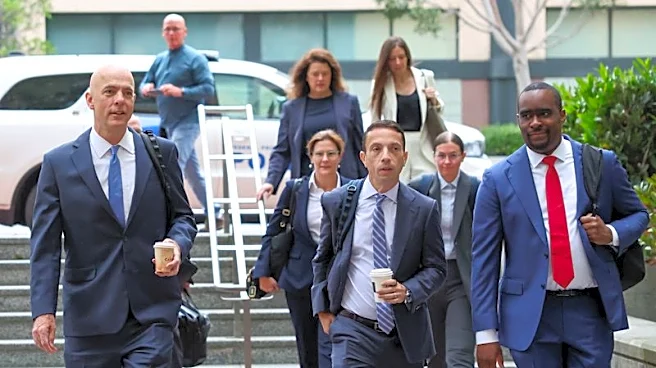
Lawyers representing State Farm in a Los Angeles lawsuit have apologized for including artificial intelligence-generated 'hallucinations' in their legal filings. The lawsuit was filed by Fa’alagilagi Meni-Siliga against State Farm, a contractor, and a public
adjuster, following a fire and subsequent water damage that left her home uninhabitable and led to her family's financial distress and foreclosure. Eric Khodadian, Meni-Siliga's attorney, discovered that State Farm's motions contained "cases that do not exist, quotes that do not exist, and holdings that do not exist." Kenneth Katel, lead trial counsel for State Farm, apologized to the court and the plaintiff, taking full responsibility and stating that his co-counsel had used AI to prepare some filings without his knowledge. The lawyer who used the AI, Jacquelene Robinson, confirmed that seven case citations across eight filings were non-existent, along with incorrect titles and quotes, attributing the error to her mistaken belief that an AI tool called Irys was tied to her firm's Westlaw subscription and performed an internal cite check.
Why It's Important?
This incident highlights a critical and growing concern within the legal industry regarding the use of generative AI. A recent survey indicates that 41% of law firms and 47% of corporate legal departments are now utilizing generative AI, leading to an increase in legal 'hallucinations.' These AI errors, where the technology fabricates information, can have severe consequences, undermining the integrity of legal proceedings and potentially leading to miscarriages of justice. The case demonstrates the urgent need for robust verification processes and clear ethical guidelines for AI integration in legal practice. It also raises questions about accountability when AI tools produce erroneous information, especially when lawyers are unaware of their co-counsel's reliance on such technology. The financial and personal toll on the plaintiff, Fa’alagilagi Meni-Siliga, whose home was lost, underscores the real-world impact of such legal inaccuracies.
What's Next?
The case is scheduled to go to trial in October. State Farm is currently reviewing the incident, with a spokesperson stating that the company expects its external counsel to adhere to the highest ethical standards and ensure the accuracy of all legal filings. Kenneth Katel's firm has updated its policy regarding AI use, though specific details were not provided. This incident will likely prompt further scrutiny and potentially stricter regulations or guidelines for AI usage within the legal profession, both at law firms and within corporate legal departments. Legal researchers and technology providers will also face increased pressure to develop more reliable AI tools that can guarantee hallucination-free legal citations. The outcome of this specific lawsuit may also influence how courts address cases where AI-generated errors are identified, potentially setting precedents for future legal challenges involving artificial intelligence.
Beyond the Headlines
The State Farm case exposes a deeper ethical and professional challenge for the legal industry as it grapples with the rapid advancement of artificial intelligence. The concept of 'hallucinations' in AI, where the technology generates plausible but false information, is not unique to legal applications but is particularly problematic in a field where accuracy and precedent are paramount. This incident could accelerate the development of specialized AI tools designed specifically for legal research that prioritize factual accuracy and citation verification. Furthermore, it may lead to a re-evaluation of legal education and professional development, with a greater emphasis on critical evaluation of AI outputs and understanding the limitations of these technologies. The case also raises questions about the liability of AI developers and providers when their tools contribute to professional malpractice. Ultimately, this event serves as a stark reminder that while AI offers immense potential for efficiency, human oversight and ethical responsibility remain indispensable in critical fields like law.