




What's Happening?
Kendrick Lamar, a prominent figure in contemporary hip-hop, has consistently incorporated Jamaican influences into his artistic expression, spanning his music, collaborations, and fashion choices. This connection is evident through his work with Jamaican artists
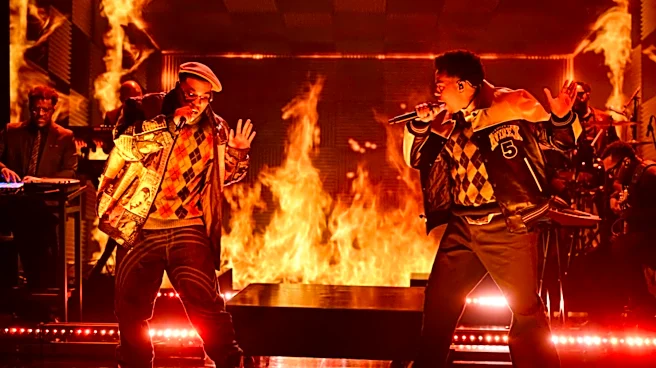
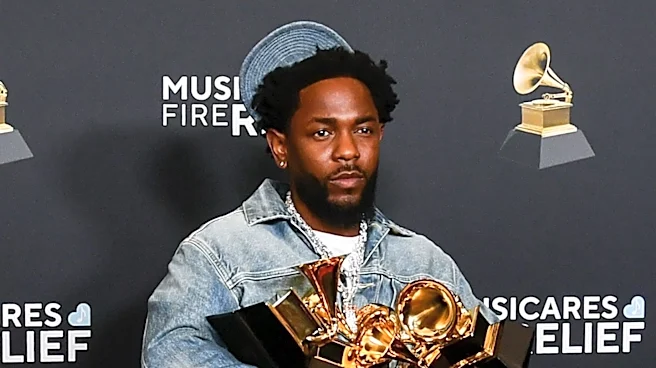
like Agent Sasco on 'The Blacker the Berry' and the sampling of Boris Gardiner's 'Every Nigger Is a Star' in 'Wesley's Theory.' Furthermore, British-Jamaican fashion designer Martine Rose has become a key collaborator, designing outfits for Lamar's major appearances, including Grammy wins and Super Bowl halftime performances. Ideologically, Lamar has referenced Jamaican National Hero Marcus Garvey in his lyrics since his debut album, 'Section.80,' highlighting Garvey's Pan-Africanist ideals of Black pride and self-determination. These influences demonstrate a deep and ongoing engagement with Jamaican culture, history, and artistic talent, shaping Lamar's exploration of Black identity and racial consciousness.
Why It's Important?
The integration of Jamaican culture into Kendrick Lamar's widely acclaimed work holds significant importance for several reasons. It amplifies the global reach and influence of Jamaican music, fashion, and philosophical movements within mainstream American culture. By collaborating with Jamaican artists and designers, Lamar provides a platform for their talent and perspectives, fostering cross-cultural exchange and recognition. His lyrical references to figures like Marcus Garvey introduce Pan-Africanist ideologies to a broader audience, encouraging discussions about Black history, identity, and empowerment. This cultural fusion enriches the hip-hop landscape, demonstrating how diverse influences can contribute to powerful artistic narratives that resonate with global audiences. It also underscores the interconnectedness of Black diasporic experiences and artistic traditions, reinforcing a shared heritage and ongoing dialogue.
What's Next?
Given Kendrick Lamar's consistent engagement with Jamaican influences throughout his career, it is highly probable that future projects will continue to feature similar collaborations and thematic explorations. Fans can anticipate further musical partnerships with Jamaican artists, potentially introducing new sounds and perspectives into his discography. His ongoing relationship with Martine Rose suggests that her designs will likely remain a staple in his public image, further solidifying the fusion of high fashion and cultural identity. The continued referencing of historical figures like Marcus Garvey indicates a sustained commitment to exploring themes of Black identity, self-determination, and social commentary in his work. This trajectory suggests that Lamar will continue to be a significant conduit for bringing diverse cultural narratives to the forefront of global music and fashion.
Beyond the Headlines
The deep integration of Jamaican influences in Kendrick Lamar's art extends beyond mere collaboration; it represents a profound dialogue between different facets of the Black diaspora. This artistic choice highlights the enduring legacy of Jamaican cultural movements, such as reggae and dancehall, and their philosophical underpinnings, like Garveyism, in shaping global Black consciousness. It challenges the often-monolithic perception of Black identity by showcasing its rich diversity and interconnectedness across geographical boundaries. Ethically, Lamar's platform amplifies voices and narratives that might otherwise remain marginalized in mainstream media, fostering a more inclusive cultural landscape. This ongoing exchange contributes to a broader understanding of how art can serve as a powerful tool for cultural preservation, identity formation, and social commentary, reflecting a shared spirit of resilience and expression within the Black community.