



What's Happening?
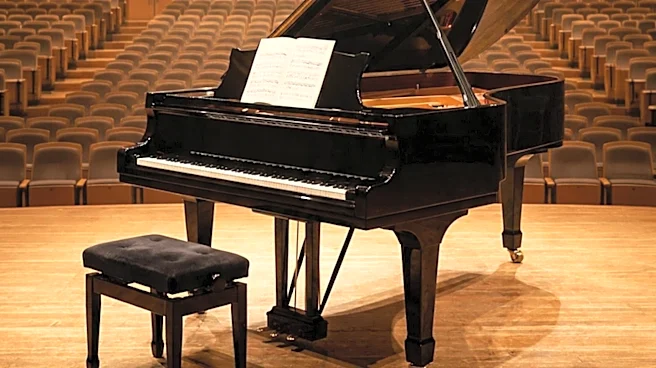
Maria Carreras (1877–1966), an Italian-born pianist who achieved an international concert career, including a performance with the New York Philharmonic under Arturo Toscanini, is being rediscovered after largely disappearing from historical records.
Despite her significant career, information about Carreras is scarce, with even basic biographical details being elusive. She studied with prominent figures like Giovanni Sgambati (a pupil of Liszt) and Ferruccio Busoni. Her career included engagements across Europe, such as performances in Portugal and Italy, before she established herself in the U.S., making her New York debut in 1923. Critics praised her 'interpretative authority' and the imagination of her playing. Carreras also made recordings on piano rolls for the Duo-Art system, preserving her interpretations of works by Bach, Beethoven, Chopin, Liszt, Schubert, and Grieg. Additionally, she was active as a piano teacher, with one of her pupils, Aileen Fealy, becoming a concert pianist.
Why It's Important?
The rediscovery of Maria Carreras highlights gaps in music history and raises questions about how certain artists are remembered while others fade into obscurity. Her story underscores the challenges faced by many female pianists of her generation in achieving lasting recognition and visibility in a professional world where such outcomes were not guaranteed. Her career, spanning both European and American stages, demonstrates the international nature of classical music performance in the early 20th century. The survival of her piano-roll recordings provides valuable insight into her playing style and the musical interpretations of her era, offering a window into a lost part of piano history. Her case prompts a re-evaluation of historical narratives, encouraging a more inclusive understanding of past musical contributions.
What's Next?
Further research into Maria Carreras's life and career could lead to a more comprehensive understanding of her contributions to classical music. The availability of her piano-roll recordings offers an opportunity for contemporary listeners and scholars to engage directly with her artistry. Efforts to digitize and disseminate these recordings could bring her work to a wider audience. Her story may also inspire similar investigations into other overlooked historical figures in music, particularly women artists whose legacies may have been under-documented. Academic studies and biographical works could emerge, shedding more light on her impact and the broader context of her career, potentially leading to her inclusion in more standard music history curricula and discussions.
Beyond the Headlines
Carreras's story delves into deeper questions about the construction of historical memory and the factors that contribute to an artist's legacy. The reasons for her obscurity are multifaceted, potentially including the limited survival of biographical documentation, the influence of pupils, institutional willingness to preserve legacies, and gender biases prevalent in her time. Her case also points to a paradox of abundance in countries with rich musical heritages, where numerous significant contributions can become submerged. Re-examining artists like Carreras is not merely about adding names to a list but about critically questioning how music history is written and what is deemed worthy of remembrance. It encourages a more nuanced appreciation of the past, acknowledging that historical narratives are often incomplete and shaped by various societal and cultural forces.