



What's Happening?
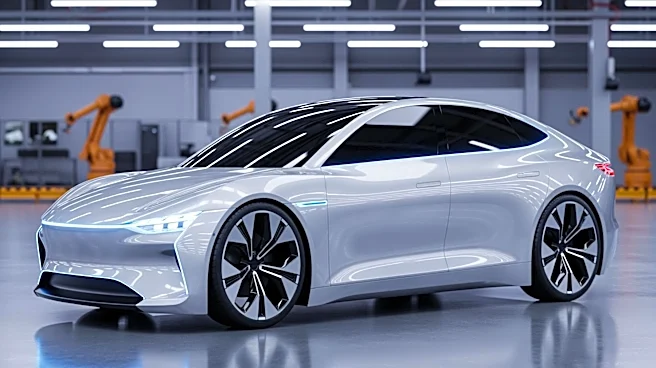
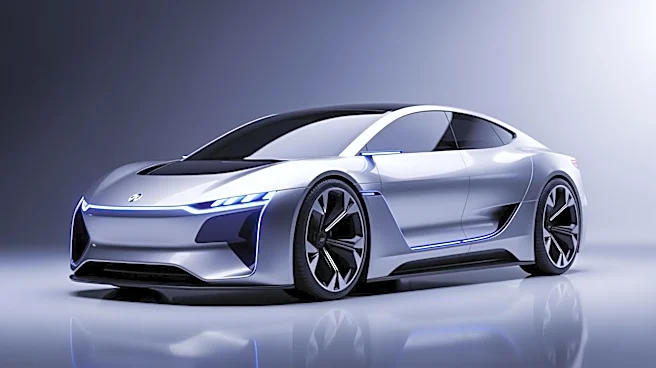
Tesla has unveiled the full specifications of its new Cybercab, a two-seat robotaxi, through EPA certification documents. The Cybercab features a 3,113-pound curb weight, a 219 horsepower motor, and a 48 kWh battery pack. The vehicle is designed for efficiency,
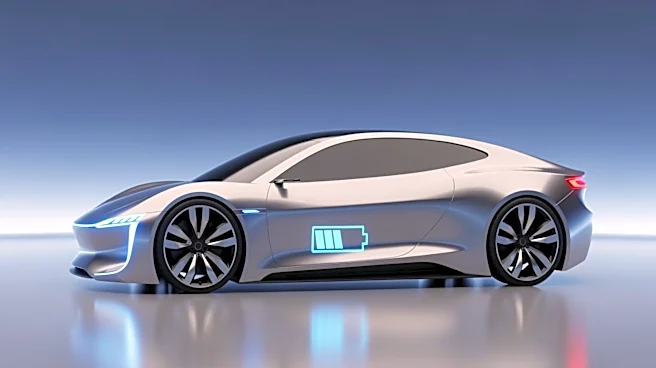
with a focus on optimizing the powertrain rather than minimizing costs. The Cybercab's motor is an AC 3-Phase Permanent Magnet type, and it operates on a front-wheel-drive system with regenerative braking on the front wheels. The vehicle's battery is a lithium-ion type with a capacity of approximately 47.6 kWh. Despite its lightweight design, the Cybercab is heavier than expected for a two-seat vehicle, likely due to the inclusion of autonomous driving hardware and crash structures. The Cybercab has an unadjusted EPA range of 418.2 miles, which translates to an adjusted range of about 293 miles under real-world conditions.
Why It's Important?
The introduction of the Cybercab marks a significant step in Tesla's efforts to expand its presence in the autonomous vehicle market. The vehicle's specifications highlight Tesla's commitment to efficiency, which could set a new standard for electric vehicles in the ride-hailing industry. The Cybercab's design and performance metrics suggest that Tesla is prioritizing energy efficiency over cost, which could influence future developments in the electric vehicle sector. The vehicle's introduction into commerce, despite the lack of regulatory approval for unsupervised autonomous driving, underscores the challenges Tesla faces in achieving full autonomy. The Cybercab's efficiency could also have broader implications for energy consumption and sustainability, potentially influencing consumer choices and industry standards.
What's Next?
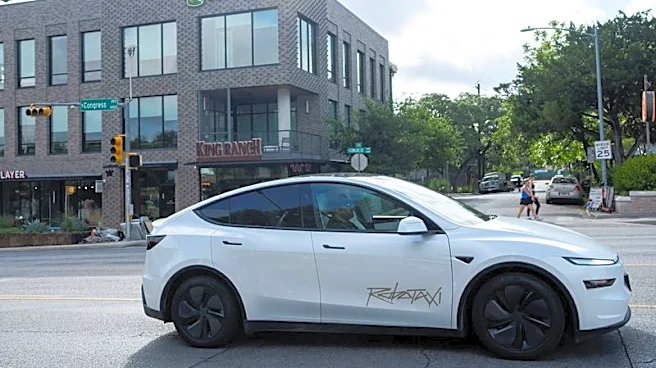
Tesla has technically introduced the Cybercab into commerce, but the vehicle is not yet operational for passenger transport due to pending regulatory approvals for autonomous driving. The company will likely focus on obtaining these approvals to fully utilize the Cybercab's capabilities. In the meantime, Tesla may continue to refine the vehicle's technology and efficiency. The broader industry will be watching closely to see how Tesla navigates the regulatory landscape and whether the Cybercab can achieve its intended purpose as a driverless ride-hailing vehicle. The outcome could have significant implications for the future of autonomous vehicles and the ride-hailing industry.