





What's Happening?
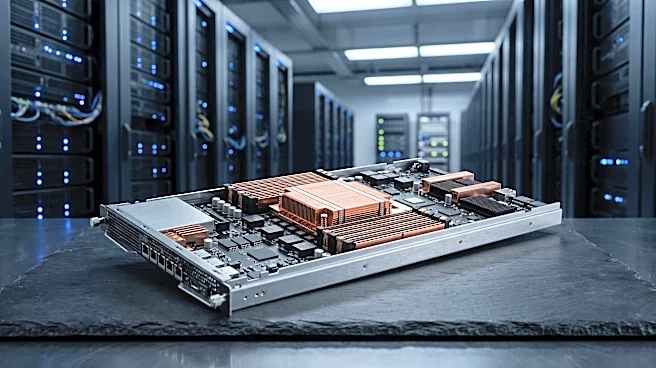
Rockwell Automation (ROK) has been actively expanding its artificial intelligence (AI) initiatives, including the launch of NVIDIA-powered EdgeAI industrial PCs and the enhancement of its Emulate3D digital twin tools. The company has also secured new
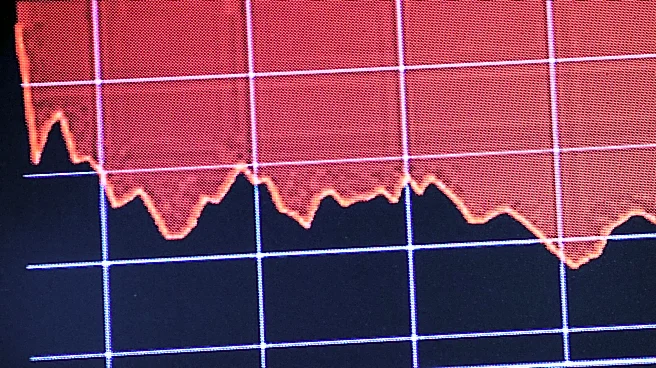
Plex MES projects and formed a partnership with Velotic. Despite these advancements, Rockwell Automation's share price has experienced a choppy period, with a 30-day return down 12.66% and a 90-day return down 8.50%, even after a recent 7-day gain of 8.93%. Over the past year, the total shareholder return has been a modest 0.92%. This performance suggests that investor sentiment has cooled, leading to a reassessment of the company's growth potential and the execution risks associated with its new digital and industrial computing ventures. According to Simply Wall St, three investors view Rockwell Automation as 12% overvalued, with a fair value pegged at $350.75 compared to its recent closing price of $394.25.
Why It's Important?
The investor sentiment surrounding Rockwell Automation's AI factory push highlights a critical challenge for industrial technology companies: translating innovation into sustained market value. While the company's installed base of Logix controllers provides a significant competitive advantage due to high switching costs for customers, the recent share price performance indicates that the market is scrutinizing the immediate financial returns of its AI investments. This situation is important for the broader U.S. industrial sector as it reflects the market's evolving expectations for AI integration. Companies that can effectively demonstrate how AI initiatives will lead to tangible improvements in orders, margins, and project awards will likely gain investor confidence. Conversely, those that struggle to articulate or deliver on these metrics may face similar valuation pressures, impacting their ability to fund future technological advancements and maintain market leadership.
What's Next?
Rockwell Automation faces the immediate challenge of addressing investor concerns regarding its valuation and growth trajectory. The company will need to clearly demonstrate how its AI-focused product launches and software wins will translate into improved financial performance, particularly in terms of orders and margins. Any stumble in these areas or slower awards for large projects could further challenge the current overvaluation narrative. For the broader industrial automation market, the performance of companies like Rockwell Automation will serve as a bellwether for the successful integration of AI into factory operations. Future developments will likely involve increased transparency from companies on the return on investment for AI initiatives and a greater emphasis on how these technologies contribute to bottom-line growth. Investors will be closely watching for signs of accelerated adoption and measurable efficiency gains from these advanced industrial computing systems.
Beyond the Headlines
The situation with Rockwell Automation extends beyond immediate financial metrics, touching upon the fundamental shift occurring in industrial manufacturing due to AI. The company's strong installed base, built on proprietary Logix controllers, represents a significant barrier to entry for competitors and ensures customer stickiness. However, the current market reaction suggests that even established players with robust ecosystems must continuously innovate and prove the value of new technologies like AI. This scenario underscores a broader trend where the perceived 'overvaluation' of tech-forward industrial companies might reflect a market grappling with how to accurately price the long-term, transformative potential of AI against short-term financial performance. It also highlights the ethical and practical considerations of retraining staff and managing downtime risks associated with adopting new AI-driven control platforms, which are crucial for successful industrial modernization.