





What's Happening?
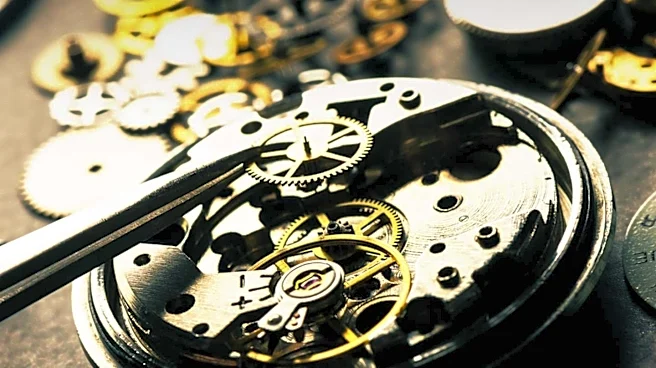
The process of manufacturing a Tudor watch involves a meticulous blend of traditional craftsmanship and modern automation. The production begins with the creation of titanium case blanks at Joseph Baume, followed by heat treatment in a specialized furnace.
The dials are hand-painted and hand-lumed at Montremo, requiring up to thirty separate passes depending on the finish. The final assembly takes place at Kenissi, a movement house established by Tudor in 2016, where each component is tracked with RFID tags through an automated assembly line. The entire facility operates on a just-in-time system, producing watches to order without maintaining stock. Each watch undergoes rigorous testing, including water-pressure and antimagnetism trials, before being packaged and shipped.
Why It's Important?
This detailed insight into Tudor's manufacturing process highlights the brand's commitment to quality and precision, which are hallmarks of Swiss watchmaking. The integration of cutting-edge technology with traditional techniques ensures that each watch meets high standards of craftsmanship. This approach not only enhances the brand's reputation but also sets a benchmark for the luxury watch industry. The use of automation and just-in-time production reflects a shift towards more efficient manufacturing practices, which could influence other sectors to adopt similar methods. The rigorous testing protocols ensure reliability and durability, key factors that appeal to consumers and reinforce brand loyalty.
What's Next?
As Tudor continues to innovate, the watch industry may see further advancements in manufacturing techniques and quality control measures. The success of Tudor's automated and efficient production model could inspire other luxury brands to explore similar strategies. Additionally, the emphasis on precision and reliability may lead to increased consumer demand for high-quality timepieces, potentially driving growth in the luxury watch market. Tudor's approach could also prompt discussions on sustainability and resource management within the industry, as just-in-time production minimizes waste and optimizes resource use.
Beyond the Headlines
The manufacturing process of Tudor watches underscores the cultural significance of Swiss watchmaking, which is renowned for its precision and craftsmanship. This tradition, combined with modern technology, reflects a broader trend of preserving heritage while embracing innovation. The meticulous attention to detail in each step of production highlights the ethical commitment to quality and consumer satisfaction. As the industry evolves, the balance between tradition and innovation will continue to shape the future of luxury watchmaking, influencing consumer expectations and industry standards.