





What's Happening?
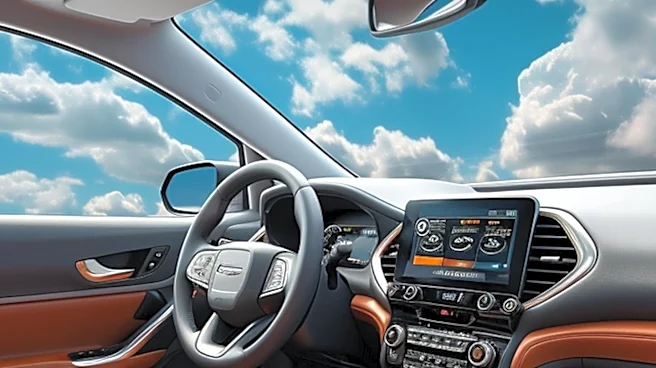
General Motors (GM) is moving away from integrating Apple CarPlay and Android Auto in its vehicle lineup, opting instead for its own in-house infotainment system. This decision, initially applied to its electric vehicles (EVs) in 2023, will extend to its gas-powered
vehicles. GM's new system will replace its built-in Google operating system with Google's AI assistant, Gemini, aiming to deliver a custom-built AI assistant by the end of 2026. This shift has generated controversy, with critics suggesting it's a move towards subscription models and data monetization. However, there is one notable exception: the 2027 model of Cadillac's luxury EV, the Lyriq, will continue to support both Android Auto and Apple CarPlay. This makes the Lyriq the only GM EV sold in North America compatible with these third-party infotainment systems, a surprising move given GM's broader strategy.
Why It's Important?
This strategic shift by GM has significant implications for the automotive industry and consumers. By developing its own infotainment system, GM aims to gain greater control over the user experience and potentially unlock new revenue streams through subscriptions and data. This could lead to a more integrated and personalized in-car experience, as touted by GM executives. However, it also risks alienating a segment of consumers who value the familiarity and functionality of CarPlay and Android Auto. The decision to retain these systems in the 2027 Cadillac Lyriq suggests that GM recognizes the importance of these features for certain luxury segments or that it is testing different approaches. This move could influence other car manufacturers to either follow suit or double down on offering third-party integrations, shaping the future of in-car technology and consumer expectations.
What's Next?
GM plans to fully implement its new in-house infotainment system across its gas-powered vehicle lineup, with the goal of delivering a custom-built AI assistant by the end of 2026. The 2027 Cadillac Lyriq will serve as an outlier, continuing to offer Apple CarPlay and Android Auto. It remains to be seen how consumers will react to the broader removal of these popular systems and whether the enhanced in-house experience will be enough to offset the loss for many. Other car manufacturers will likely be closely watching GM's progress and consumer feedback to inform their own strategies regarding infotainment systems. This could lead to a divergence in the market, with some brands prioritizing proprietary systems and others continuing to offer third-party integrations, creating a more varied landscape for in-car technology.
Beyond the Headlines
The move by GM to phase out Apple CarPlay and Android Auto highlights a broader industry trend towards greater control over the in-car digital experience. This shift isn't just about technology; it's about data ownership and potential new business models. By controlling the infotainment system, GM can collect valuable data on driver behavior and preferences, which could be used for targeted advertising, personalized services, or even to inform future vehicle design. This raises ethical considerations regarding data privacy and how this information will be used. Furthermore, it could lead to a more fragmented user experience across different car brands, potentially making it more challenging for consumers to switch between vehicles if they are accustomed to a specific infotainment ecosystem. The long-term implications could reshape the relationship between car manufacturers, tech companies, and consumers, with data becoming an increasingly valuable commodity in the automotive sector.