



What's Happening?
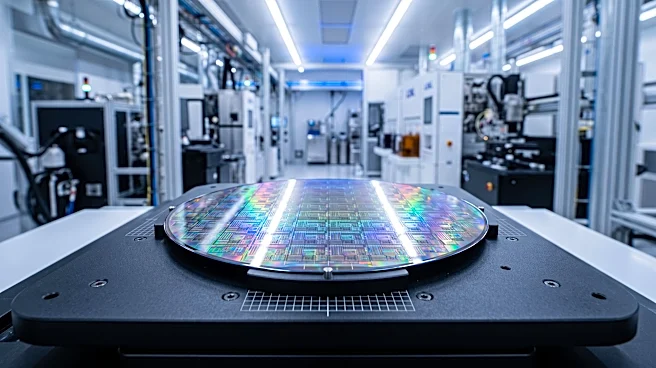
The semiconductor processor IP core market is experiencing significant growth, fueled by the increasing demand for artificial intelligence (AI) and the shift towards heterogeneous and domain-specific designs. Semiconductor processor IP cores are reusable
hardware designs crucial for system-on-chip development, accelerating product creation and enabling integration across various sectors including consumer electronics, automotive systems, communications equipment, industrial automation, and data infrastructure. Market dynamics are currently shaped by the need for higher performance, reduced power consumption, enhanced security, and greater customization. The selection of these IP cores increasingly depends on factors such as software compatibility, development tools, verification quality, licensing flexibility, and support for integrating multiple processing architectures. This trend highlights a move away from general-purpose processing towards more specialized solutions that combine different processing elements like application processors, microcontrollers, digital signal processors, graphics engines, neural-processing units, vector-computing elements, and security components.
Why It's Important?
This market shift is critical for U.S. industries as it directly impacts the development of advanced technological products and infrastructure. The demand for processor IP that efficiently handles AI operations, such as matrix operations, inference, memory movement, and real-time data processing under strict thermal and power constraints, is pushing innovation. This encourages tighter integration of CPUs with specialized capabilities like neural-processing, graphics, vector, and security features. For U.S. technology companies, this means a greater emphasis on optimized libraries, robust software toolchains, dependable verification processes, and transparent performance-per-watt metrics. Companies that can adapt to these architectural and technological trends, embracing open instruction-set architectures for customization while leveraging established architectures for their mature software ecosystems, stand to gain a competitive advantage in the global market. Conversely, those unable to keep pace with these evolving demands risk falling behind in critical sectors like AI, automotive, and cloud computing.
What's Next?
The semiconductor processor IP core market is expected to continue its trajectory towards more specialized and integrated designs. Future developments will likely focus on advanced packaging, chiplets, and meeting stringent functional-safety requirements, alongside addressing increasing verification complexity. These factors will significantly influence the selection and integration strategies for IP cores. Organizations will need to carefully assess trade-offs between customization, ecosystem maturity, and implementation risk when making technology investments. The ongoing evolution of AI will further drive the need for processor IP that can efficiently manage complex computational tasks, leading to continuous innovation in processor architecture and design. This will necessitate ongoing research and development in areas like neural-processing and vector-computing elements to support the growing demands of AI-enabled devices across various applications.
Beyond the Headlines
The shift towards heterogeneous and domain-specific designs in semiconductor processor IP cores has broader implications beyond immediate market trends. It signifies a fundamental change in how computing power is conceptualized and deployed, moving towards highly optimized solutions for specific tasks rather than general-purpose processing. This specialization could lead to significant advancements in energy efficiency and performance for AI applications, potentially reducing the environmental footprint of data centers and AI-powered devices. Furthermore, the emphasis on security and functional-safety components within these integrated designs highlights a growing concern for the reliability and trustworthiness of AI systems, particularly in critical applications like autonomous vehicles and industrial automation. This evolution also raises questions about the future of open-source hardware architectures and their potential to democratize access to advanced computing capabilities, fostering innovation across a wider range of developers and companies.