



What's Happening?
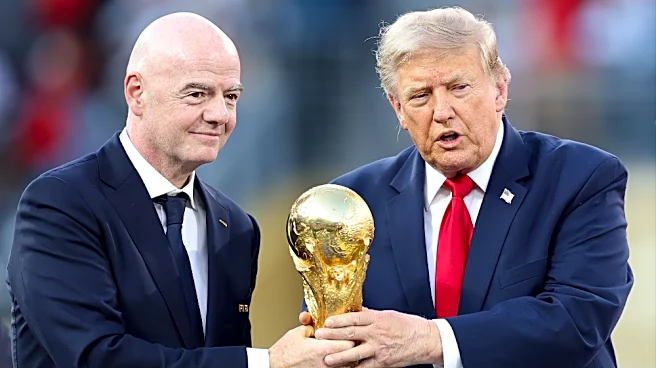
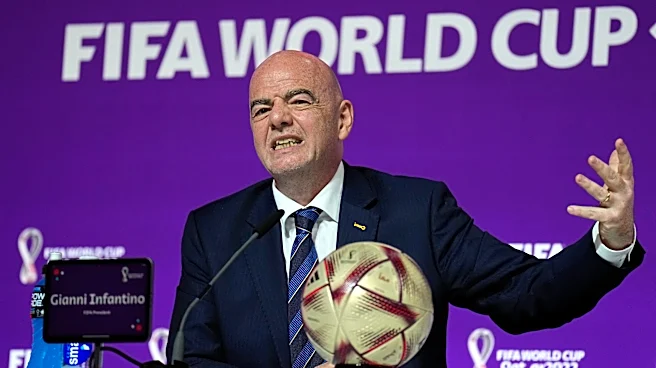
Concacaf has issued a strong statement against FIFA President Gianni Infantino following his decision to abandon a controversial plan to sell a stake in FIFA to private investors. The proposal, introduced by Infantino on July 28, faced significant backlash
from major football organizations, including UEFA and Concacaf, leading to its withdrawal on July 31. UEFA had threatened to boycott FIFA competitions if the plan proceeded, and Concacaf publicly rejected the proposal. Concacaf's statement criticized the lack of transparency and due process in advancing the plan, describing it as a symptom of poor governance under Infantino's leadership. The statement was echoed by FIFA's chief operating officer, Kevin Lamour, who emphasized the need for football leaders to reassess their decisions. Former U.S. Soccer president Carlos Cordeiro resigned from his advisory role with Infantino, expressing his opposition to the proposal.
Why It's Important?
The controversy surrounding Infantino's proposal highlights significant governance issues within FIFA, potentially affecting the organization's credibility and leadership stability. The backlash from UEFA and Concacaf underscores the importance of transparency and consultation in decision-making processes, especially for initiatives involving major assets like the FIFA World Cup. The incident may influence Infantino's re-election prospects in March, as Concacaf president Victor Montagliani is reportedly considering a challenge. The situation also reflects broader concerns about the commercialization of football and the need for governance reforms to ensure the sport's integrity and sustainability.
What's Next?
With Infantino's re-election approaching, the fallout from this proposal could impact his campaign and leadership within FIFA. Stakeholders may push for governance reforms to prevent similar unilateral decisions in the future. The potential candidacy of Victor Montagliani could introduce new dynamics in FIFA's leadership race, possibly leading to shifts in policy and governance priorities. Football organizations may also seek to strengthen their collective influence to ensure more inclusive decision-making processes.