



What's Happening?
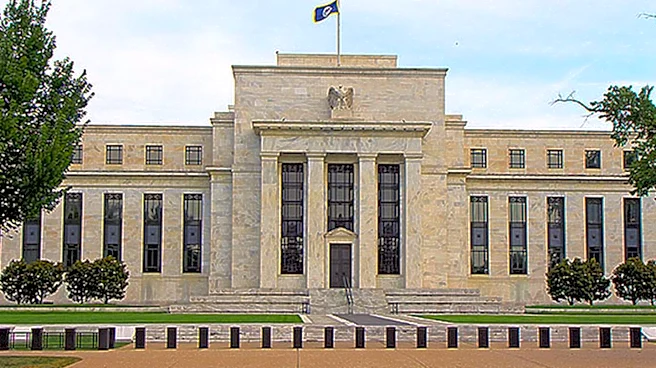
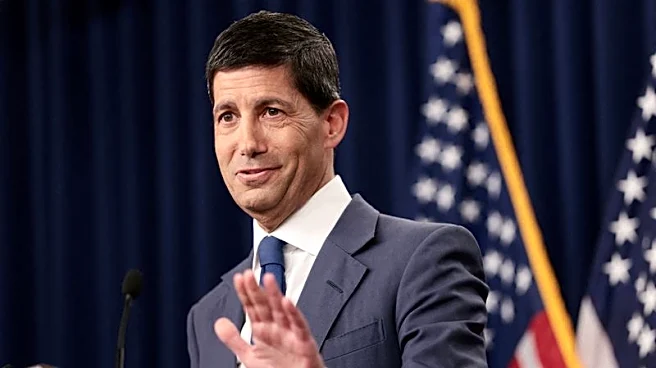
St. Louis Federal Reserve President Alberto Musalem stated on Friday that additional tightening of monetary policy will be necessary "soon." Speaking at the Shadow Open Market Committee, Musalem highlighted that inflation remains "too high," exceeding
the central bank's long-term target of 2%. He referenced the personal consumption expenditures price index, which showed annual inflation above 3%. Despite this, Musalem described the labor market as "remarkably stable and balanced," with an unemployment rate of 4.2%, aligning with the median of long-run projections by the Federal Open Market Committee (FOMC). Musalem emphasized that restoring price stability in a timely manner is crucial for supporting employment and economic growth, suggesting that earlier, smaller adjustments are less disruptive than larger, abrupt actions taken later. He is not a voting member of the FOMC this year but is expected to have a vote in 2028.
Why It's Important?
Musalem's comments signal a potential shift in the Federal Reserve's approach, reinforcing investor expectations for a rate hike at the next FOMC meeting in December. The market is currently pricing in a roughly 76% likelihood of a quarter-percentage-point increase. This move is critical for the U.S. economy as persistent inflation erodes purchasing power and creates uncertainty for businesses and consumers. By advocating for tighter monetary policy, Musalem underscores the Fed's commitment to its dual mandate of price stability and maximum employment. If inflation becomes entrenched, the economic costs of reducing it could be significantly higher, potentially leading to more severe impacts on the labor market and overall economic growth. Businesses might face increased borrowing costs, affecting investment and expansion plans, while consumers could see higher interest rates on loans and mortgages.
What's Next?
The Federal Open Market Committee (FOMC) is expected to convene for its next meeting in December, where a decision on interest rates will be made. Following Musalem's remarks, and similar sentiments from other Fed officials, there is a strong indication that the FOMC will consider raising rates by a quarter percentage point. This potential action will be closely watched by financial markets, businesses, and consumers, as it will influence borrowing costs, investment decisions, and overall economic activity. The Fed will continue to monitor inflation expectations and economic data, including the personal consumption expenditures price index and labor market indicators, to guide its future policy decisions. The goal is to bring inflation back to the 2% target without unduly disrupting the stable labor market.
Beyond the Headlines
The debate within the Federal Reserve regarding the timing and magnitude of monetary policy adjustments highlights a delicate balancing act. While controlling inflation is paramount, the Fed must also consider the potential impact on economic growth and employment. Musalem's argument for "incremental adjustments made earlier" suggests a proactive strategy to prevent inflation from becoming deeply embedded in the economy. This approach aims to mitigate the risk of a more severe economic downturn later, which could result from delayed and more aggressive interventions. The long-term implications of these decisions extend to the stability of the U.S. dollar, international trade, and the confidence of global investors in the U.S. economy. The Fed's credibility in managing inflation expectations is also at stake, influencing how consumers and businesses plan for the future.