







What's Happening?
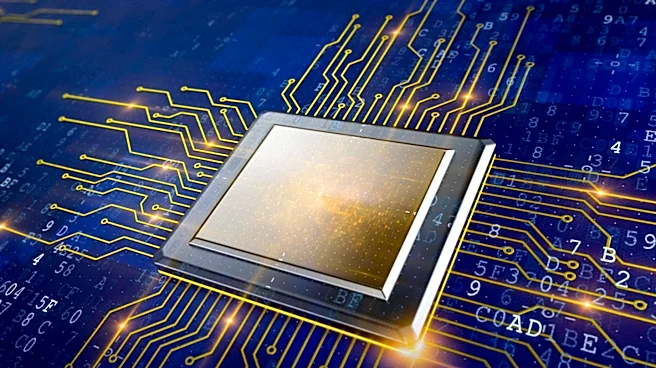
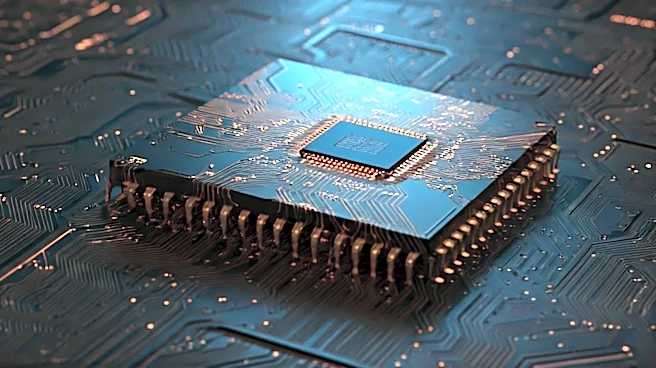
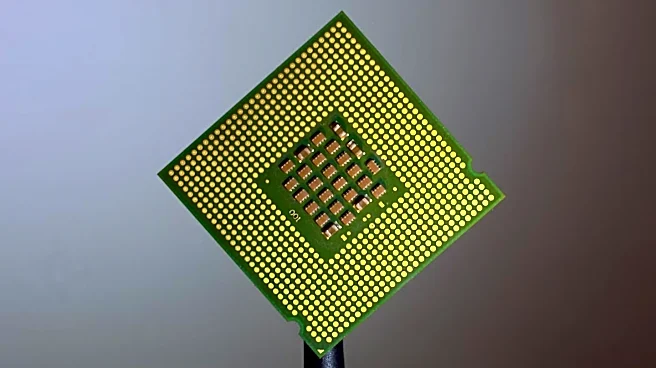
IBM has announced a groundbreaking development in chip technology with the creation of a prototype chip that contains nearly 100 billion transistors. This new chip, which is the size of a fingernail, utilizes a three-dimensional technique to achieve this
high density, effectively doubling the number of transistors compared to the current state-of-the-art chips. The chip is expected to offer 70% higher energy efficiency and 50% higher performance than existing leading chips. IBM's innovation involves stacking two layers of silicon circuitry, a process that took 15 years to develop. This advancement marks a significant step in the evolution of chip manufacturing, as it allows for transistor scaling in the Z direction, a first in the industry. The technology is anticipated to be integrated into commercial devices within the next decade.
Why It's Important?
The introduction of IBM's new chip technology is poised to have a substantial impact on the computing industry. By significantly increasing energy efficiency and performance, this development could lead to longer battery life for mobile devices and reduced energy consumption in data centers. As the demand for more powerful and efficient computing solutions grows, IBM's innovation could play a crucial role in meeting these needs. Additionally, the ability to pack more transistors into a smaller space without overheating or causing current leakage addresses some of the key challenges faced by chip manufacturers. This advancement not only pushes the boundaries of current technology but also sets a new standard for future developments in the field.
What's Next?
IBM's new chip technology will need to be integrated into the global manufacturing chain, a process that involves complex machinery and thousands of individual operations. The company aims to have these chips in commercial devices within the next decade. As the industry continues to push against the limits of physics, further innovations will be necessary to overcome challenges such as unwanted quantum effects and current leakage. The success of IBM's technology could influence other chip makers to adopt similar approaches, potentially leading to widespread changes in chip manufacturing processes.
Beyond the Headlines
The development of IBM's new chip technology highlights the ongoing race in the tech industry to achieve greater efficiency and performance. As components become smaller, the industry faces increasing challenges related to quantum effects and cooling. This innovation underscores the importance of continued research and collaboration among industry leaders to address these challenges. The potential for quantum technologies to make the next big leap in chip development by 2050 suggests that the industry is on the cusp of a significant transformation, with IBM's current advancements paving the way.