




What's Happening?
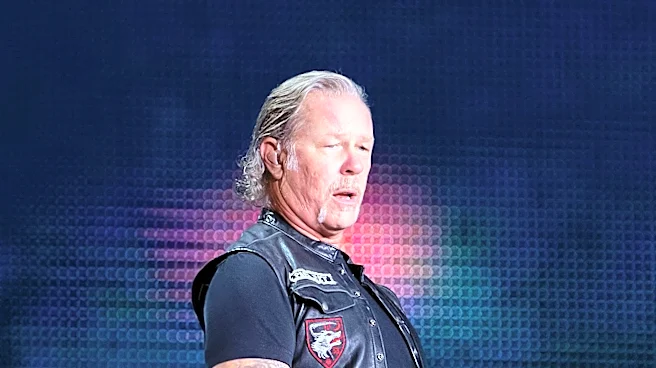
Metallica frontman James Hetfield recently announced during a residency show at The Sphere in Las Vegas that the band will not use their platform for political statements. Hetfield emphasized that Metallica's purpose is to provide entertainment, focusing
on "love, energy, and heavy music" rather than influencing audiences with political views. This statement comes amidst recent discussions about musicians engaging in political and social issues on stage, following an incident where rapper Macklemore was removed from a tour after making a speech about the conflict in Gaza. While Metallica has historically addressed political themes in some songs, such as '...And Justice For All,' the band has largely avoided direct political discourse during their live performances. Hetfield's stance reinforces a long-held personal belief that politics and religion tend to separate people, whereas music connects them.
Why It's Important?
This declaration from a band as globally recognized as Metallica highlights a significant debate within the entertainment industry regarding the role of artists and their platforms. By explicitly stating their intention to remain apolitical during shows, Metallica is taking a clear position that contrasts with a growing trend of artists using their stage to advocate for social and political causes. This approach could resonate with fans who prefer to separate entertainment from political messaging, potentially broadening their appeal to a diverse audience that may hold varying political beliefs. Conversely, it might draw criticism from those who believe artists have a responsibility to use their influence for social good. The band's decision could also influence other musicians, prompting them to consider their own stance on political engagement during performances and the potential impact on their fan base and public image.
What's Next?
Metallica's ongoing residency at The Sphere in Las Vegas will likely continue to adhere to this non-political performance policy. The band's commitment to focusing solely on music and entertainment is expected to be a consistent element of their future shows and public appearances. This stance may lead to further discussions within the music industry about the boundaries of artistic expression and political activism. Other artists and their management teams might observe the public and media reception to Metallica's approach, potentially influencing their own strategies regarding political commentary. While James Hetfield's personal views on politics have been consistent, the public reaffirmation of this policy during a high-profile residency suggests it will remain a core principle for Metallica moving forward.
Beyond the Headlines
Metallica's decision to abstain from political statements during performances touches upon deeper questions about the nature of entertainment and its relationship with societal issues. In an increasingly polarized world, the band's choice to offer a space free from political discourse could be seen as a form of escapism for their audience, allowing fans to unite over shared musical passion rather than divisive ideologies. This approach challenges the notion that all public figures must leverage their platforms for activism, suggesting an alternative where the primary role of an entertainer is to entertain. It also raises questions about the commercial implications of political neutrality versus engagement, as bands weigh the potential for alienating segments of their audience against the desire to express personal or collective beliefs. The long-term impact of this stance on Metallica's legacy and fan engagement will be a point of interest.