
What's Happening?
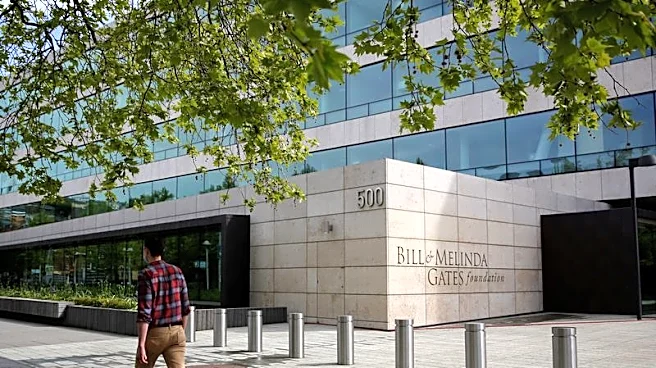
An external review commissioned by the Gates Foundation revealed that Bill Gates and foundation staff met with Jeffrey Epstein over 30 times between 2011 and 2014, despite internal concerns about reputational
risks. The meetings, which included visits to Epstein's Manhattan townhouse, focused on a public health fund that was never realized and a grant to the International Peace Institute. The review, conducted by WilmerHale, found no evidence of illegal activity or payments to Epstein. The foundation has since released a summary of the review and announced measures to strengthen its vetting process and risk management. Warren Buffett, a major donor, has ended his philanthropic relationship with the foundation, citing his children's readiness to manage his fortune.
Why It's Important?
The Gates Foundation's interactions with Epstein, despite no evidence of illegal activity, underscore the importance of managing reputational risks in large philanthropic organizations. The situation highlights the potential consequences of failing to address such risks, including the loss of major donors like Warren Buffett. The foundation's response to the review may serve as a model for other nonprofits in enhancing governance practices and managing external relationships. The incident also raises broader questions about the role of influential leaders in nonprofit governance and the need for robust oversight mechanisms.
What's Next?
The Gates Foundation will continue to implement the recommendations from the WilmerHale review, focusing on strengthening its governance and risk management processes. The foundation's board will oversee the implementation of these changes, which include a centralized vetting process for external advisers and a heightened review of proposed meetings. The foundation's leadership will need to navigate the challenges of maintaining donor trust and ensuring the integrity of its operations. The broader nonprofit sector may also look to the Gates Foundation's response as a model for managing reputational risks and enhancing governance practices.