






What's Happening?
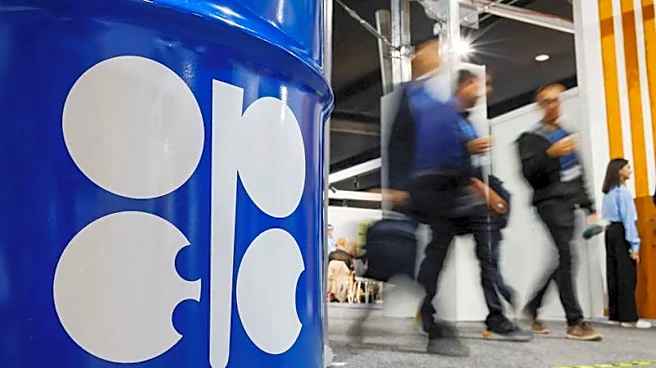
Seven members of the OPEC+ alliance, including Saudi Arabia, Russia, and Iraq, have agreed to increase oil production starting in August. This decision was made during a virtual meeting and involves raising the combined oil output by 188,000 barrels per
day. The move marks the fifth consecutive monthly production increase by these countries, following a review of global market conditions and energy demand outlook. This production boost is part of a gradual rollback of voluntary production cuts that were introduced in 2023. The decision comes as global oil markets are recovering from recent geopolitical tensions involving the United States, Israel, and Iran.
Why It's Important?
The increase in oil production by OPEC+ is significant as it reflects a response to recovering global energy markets. This decision could impact global oil prices, potentially stabilizing or reducing them, which would affect various stakeholders, including consumers and industries reliant on oil. For the U.S., this could mean changes in domestic energy prices and influence on inflation rates. Additionally, the move signals confidence in the recovery of global demand, which could have broader economic implications, including potential impacts on trade balances and energy security strategies.
What's Next?
As OPEC+ increases production, market analysts and stakeholders will closely monitor the impact on global oil prices and demand. Potential reactions from major oil-consuming countries, including the U.S., could involve adjustments in energy policies or strategic reserves. Additionally, geopolitical developments, particularly in the Middle East, could influence future production decisions. The ongoing recovery of global markets will be a key factor in determining whether further production increases are warranted.