




What's Happening?
Economists are actively debating the potential economic fallout if the current AI investment bubble bursts. Tesla CEO Elon Musk and AI researcher François Chollet recently discussed the financial bottlenecks facing the AI industry, despite strong demand
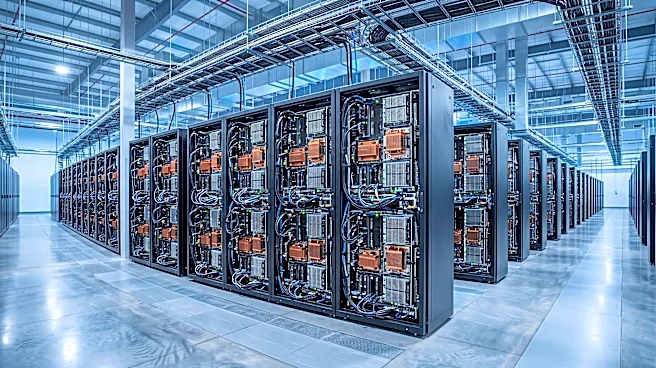
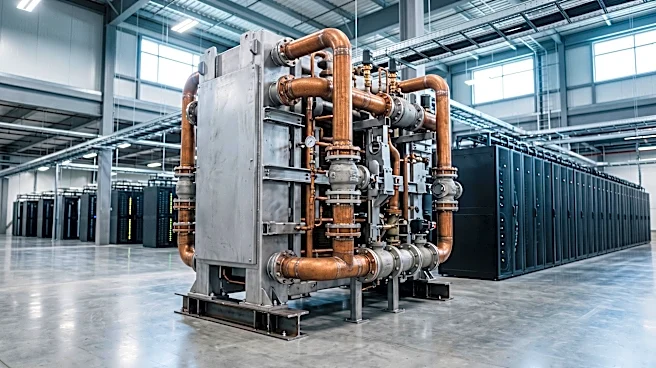
for computing power. Chollet noted the robust global demand for computing power, with GPU prices rising and high-bandwidth memory (HBM) and dynamic random-access memory (DRAM) production fully booked. Musk emphasized that the core issue is the time lag between hardware procurement and revenue generation, not a lack of demand. Companies must invest in chips, data centers, massive power infrastructure, and cooling systems months before receiving customer payments. Goldman Sachs data indicates that global AI-related capital expenditures neared $1 trillion in 2026, with cumulative debt issuance reaching approximately $600 billion. The Wall Street Journal reported on November 25 that an AI boom could end due to disappointing business profits or overbuilding of data centers. Data center construction and other AI investments are projected to account for a significantly higher proportion of GDP than internet infrastructure investments in the late 1990s and early 2000s, with these expenditures expected to increase substantially in the coming years.
Why It's Important?
The potential bursting of the AI investment bubble carries significant implications for the U.S. economy. While some economists, like Barclays Senior U.S. Economist Jonathan Millar, suggest that data center expenditures, largely for imported chips, contribute minimally to U.S. GDP (around 0.5% of growth in the past year), a sharp decline could severely impact chip manufacturers, potentially leading to a recession in Taiwan, though not necessarily in the U.S. Harvard University economist and former Federal Reserve Governor Jeremy Stein highlighted the increasing opacity of data center lending, with many loans issued by non-bank institutions like private equity funds, making them difficult to track. This 'circular financing,' where chip manufacturers invest in their customers, and various cross-guarantees, obscure who bears the risk if loans default. This lack of transparency could amplify economic shocks. Harvard University economist Jason Furman estimates that even a 30% stock market drop and a complete halt in data center construction would not be enough to trigger a recession, suggesting a downturn similar to the dot-com bust as a worst-case scenario.
What's Next?
The debate among economists, business leaders, and financial experts regarding the extent of impact from a potential AI investment bubble burst is ongoing. As debt for data center construction continues to rise, calls to limit such construction are growing. The industry will likely face continued scrutiny regarding its financial models and the sustainability of its rapid expansion. Regulators may eventually consider measures to increase transparency in the financing of data centers and AI infrastructure, especially concerning non-bank lending and cross-guarantees. Companies in the AI sector will need to navigate the financial challenges of significant upfront capital expenditure and the time lag before revenue generation, potentially leading to more cautious investment strategies or consolidation within the industry. The long-term economic impact will depend on how quickly the industry can achieve profitability and whether the current investment surge translates into tangible, widespread economic benefits.
Beyond the Headlines
The discussion around the AI investment bubble extends beyond immediate economic concerns to broader systemic risks. The increasing reliance on non-bank lending for massive infrastructure projects like data centers introduces vulnerabilities that are less regulated and harder to monitor than traditional banking channels. This 'shadow banking' aspect could obscure the true extent of financial leverage and interconnectedness within the AI ecosystem, making it difficult to assess systemic risk. The potential for 'circular financing' and cross-guarantees creates a complex web of liabilities, where a default in one area could trigger a cascade of failures across the supply chain, from chip manufacturers to data center operators. This situation echoes concerns raised during the 2008 financial crisis regarding opaque financial instruments and interconnectedness. While economists like Jeremy Stein believe a repeat of the 2008 crisis is unlikely, they warn that the economic impact could still be substantial due to these hidden linkages and the sheer scale of investment.