




What's Happening?
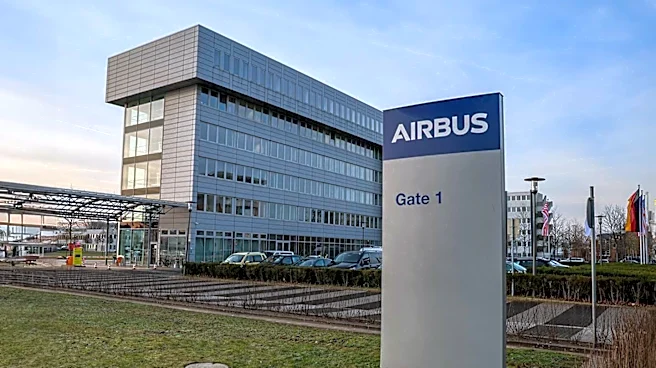
Airbus, a major European aircraft manufacturer, is set to adapt a second assembly line for the production of its A321 and A32XLR aircraft. This strategic move is anticipated to significantly boost the company's production rate for these models and is expected
to generate new employment opportunities. The announcement was made during a visit by Emmanuel Macron to the Airbus site in Blagnac, near Toulouse, as part of the Choose France summit. Macron also pledged 350 million euros in support for research and innovation within France's aeronautics industry, specifically for the Council for Civil Aeronautics Research (CORAC), to foster new technology development and enhance industry competitiveness. Additionally, plans were revealed for creating 'high potential' industrial zones with simplified administrative procedures to attract and facilitate new factory setups, aiming to strengthen France's appeal for industrial investments.
Why It's Important?
This expansion by Airbus holds significant implications for the global aerospace industry and the U.S. market. Increased production of A321 and A32XLR aircraft could lead to greater availability of these popular models, potentially impacting competition with U.S.-based aircraft manufacturers like Boeing. For U.S. airlines, this could mean more options for fleet modernization and expansion, potentially at more competitive prices due to increased supply. The creation of new jobs at Airbus, while directly benefiting Europe, also signals a robust demand in the aviation sector, which indirectly supports U.S. suppliers and partners within the aerospace supply chain. The broader French government initiatives to simplify industrial procedures and invest in aeronautics research could also foster innovations that eventually benefit the entire industry, including U.S. stakeholders through technological advancements and collaborative opportunities.
What's Next?
The adaptation of the second assembly line by Airbus is expected to proceed, leading to an increased production capacity for the A321 and A32XLR aircraft. This will likely result in a higher volume of deliveries to airlines worldwide, including those in the U.S. The 350 million euro investment in French aeronautics research will fuel innovation, potentially leading to new aircraft technologies and efficiencies that could be adopted globally. The establishment of 'high potential' industrial zones in France aims to attract further industrial investment, which could include U.S. companies looking to establish or expand their European operations. These developments are part of a broader effort to enhance France's industrial attractiveness and competitiveness, with potential long-term impacts on the global aerospace landscape and U.S. industry partnerships.
Beyond the Headlines
The strategic decision by Airbus to expand its production capabilities, coupled with significant government investment in aeronautics research, underscores a broader trend of national and corporate efforts to secure leadership in high-tech manufacturing sectors. This move highlights the ongoing competition and collaboration within the global aerospace industry, where technological advancements and production efficiency are key differentiators. The focus on simplifying administrative procedures for industrial zones reflects a growing recognition among governments of the need to create favorable environments for business growth and job creation. This could set a precedent for other nations, including the U.S., to re-evaluate their own industrial policies to attract and retain manufacturing investments, ultimately influencing global supply chains and economic development strategies.