



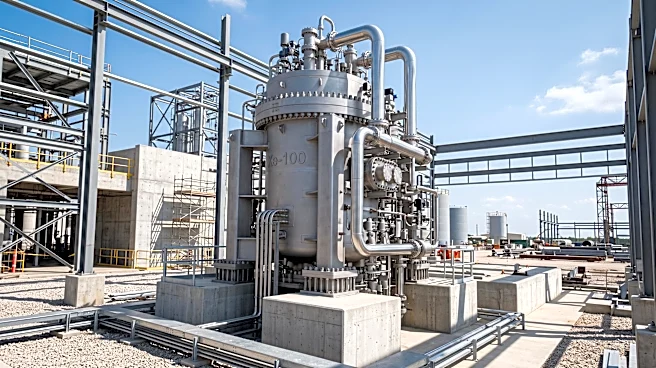
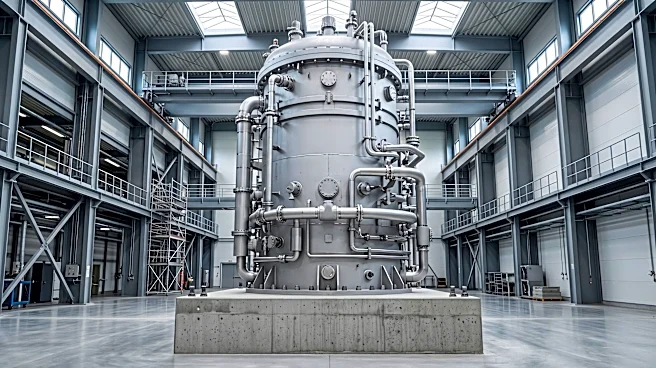
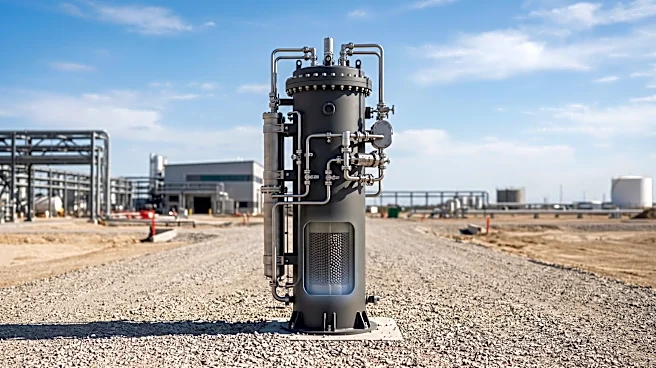
What's Happening?
The United States is actively developing small modular reactors (SMRs) with various designs and fuel types, aiming to meet growing clean energy demands. While some SMRs utilize conventional low-enriched uranium, advanced designs, such as high-temperature
gas and molten salt reactors, require High-Assay Low-Enriched Uranium (HALEU), enriched between 5% and 20%. Major technology companies are investing in SMR development, driven by clean energy incentives like the Clean Electricity Production Tax Credit (Section 45Y) and the Clean Electricity Investment Tax Credit (Section 48E) under the Internal Revenue Code. SMRs are defined as nuclear fission reactors with an electrical output capacity of up to 300 MWe per module, significantly smaller than traditional commercial reactors. The regulatory framework has been streamlined by the ADVANCE Act, introducing a risk-informed, performance-based licensing process tailored for modular designs, which credits passive safety capabilities.
Why It's Important?
The development and deployment of SMRs are crucial for the U.S. energy landscape, offering a pathway to continuous, carbon-free energy generation necessary to support increasing electrical demand from sectors like artificial intelligence compute clusters and high-performance computing facilities. SMRs are designed with passive safety systems that rely on fundamental physics, reducing the need for active emergency backup generators and potentially enhancing safety. Their modular nature allows for mass manufacturing in controlled factory environments, which can mitigate the chronic multi-billion-dollar field construction overruns historically associated with legacy gigawatt plants. Furthermore, deploying SMRs on private microgrids can help corporate operators bypass lengthy public interconnection queue delays, offering greater energy independence and grid stability. The federal tax credits provide significant financial viability, encouraging investment and accelerating commercial deployment.
What's Next?
The regulatory environment, bolstered by the ADVANCE Act, is expected to continue facilitating the licensing of SMR designs, with pre-construction regulatory timelines potentially reduced from a decade to less than thirty-six months. Commercial deployment is anticipated to accelerate, driven by direct capital investment from major cloud computing and technology corporations entering multi-decade Power Purchase Agreements (PPAs) with nuclear development consortia. The focus will be on the successful implementation of integral light-water designs due to established supply chains and lower regulatory friction, while non-light-water advanced reactors will be prioritized for co-located industrial manufacturing and green hydrogen generation facilities. The continued availability and utilization of federal incentives, including domestic content bonuses and energy community supplements, will be key to the financial success and widespread adoption of SMR projects across the U.S.
Beyond the Headlines
The shift towards SMRs represents a significant paradigm change in nuclear energy, moving from large, centralized power plants to smaller, more flexible, and potentially more secure distributed generation. This evolution could democratize nuclear power, making it accessible to a wider range of industrial and commercial users, thereby enhancing energy resilience and reducing vulnerability to large-scale grid failures. The reliance on HALEU for advanced SMRs also highlights a critical supply chain consideration, as the availability and production of this specialized fuel will be essential for the widespread adoption of these technologies. Furthermore, the integration of SMRs with industrial processes, such as high-temperature industrial heat production and green hydrogen generation, could unlock new economic opportunities and accelerate decarbonization efforts beyond just electricity generation, fostering a more integrated and sustainable energy ecosystem.