







What's Happening?
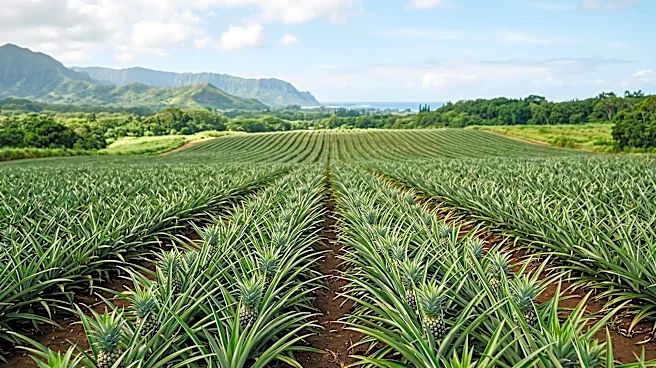
Dole is restructuring its operations in Hawaii by discontinuing its coffee business on Oahu. This strategic shift involves laying off nine employees and initiating the sale of the 154-acre Waialua Estate coffee farm. The decision comes as Dole aims to
refocus its resources and management efforts on its core fresh fruit and vegetable segments. This move is part of a broader strategy to improve earnings power through capital redirection, automation projects, and portfolio pruning. The company's recent financial performance shows a 7-day share price return of 5.23%, contrasting with a 90-day return that is down 7.10%. However, its 3-year total shareholder return stands at 32.40%, indicating longer-term momentum. Dole's current valuation suggests it is trading at a discount to fair value estimates, with the market potentially factoring in risks such as cost inflation, legal challenges, and segment volatility.
Why It's Important?
This decision by Dole signifies a strategic pivot for a major player in the agricultural sector, impacting local Hawaiian economies and the broader U.S. food market. The cessation of coffee operations and the sale of a significant landholding like the Waialua Estate could lead to changes in local agricultural land use and employment patterns in Oahu. For Dole, this move is critical for its financial health, as it seeks to enhance profitability by concentrating on higher-return segments. The market's perception of Dole's valuation, currently seen as undervalued, hinges on the successful execution of this strategy. If the company effectively redirects capital and improves efficiency, it could lead to a re-evaluation of its stock, benefiting investors. Conversely, challenges such as elevated fuel and shipping costs, along with unresolved legal issues in Hawaii, could pressure cash flows and hinder the anticipated improvements in earnings.
What's Next?
Dole will proceed with the sale of the Waialua Estate coffee farm and the transition out of coffee operations. The company's management will likely focus on integrating the capital and resources freed up from the coffee business into its more profitable fresh fruit and vegetable segments. This will involve implementing automation projects and further optimizing its product portfolio. Investors will be closely watching for signs that these strategic adjustments are leading to improved earnings and a stronger balance sheet. The market's response to these changes will determine if the perceived undervaluation of Dole's stock narrows. Additionally, the future of the Waialua Estate and its potential new ownership will be a key development for the Hawaiian agricultural landscape.
Beyond the Headlines
The decision to exit coffee operations in Hawaii highlights the ongoing challenges and strategic realignments within the agricultural industry, particularly for large corporations balancing diverse portfolios. It underscores the economic pressures that can lead companies to divest from less profitable ventures, even those with historical significance or local ties. The sale of the Waialua Estate could open doors for new agricultural ventures or land development, potentially altering the ecological and cultural landscape of Oahu. This move also reflects a broader trend where companies are increasingly scrutinizing their operational footprints to maximize shareholder value, often leading to difficult decisions regarding local employment and traditional industries. The long-term success of Dole's strategy will depend not only on financial metrics but also on its ability to navigate the social and environmental implications of such significant operational changes.