



What's Happening?
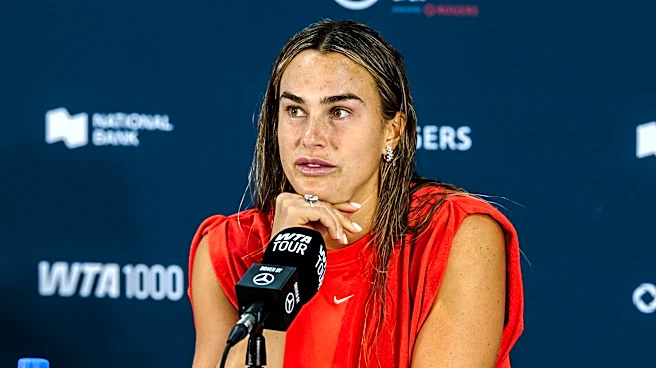
Former World No. 1 Kim Clijsters has speculated that Aryna Sabalenka's recent struggles in the 2026 tennis season might stem more from her mental state than her physical game. Speaking on the 'Served with Andy Roddick' podcast, Clijsters observed a shift
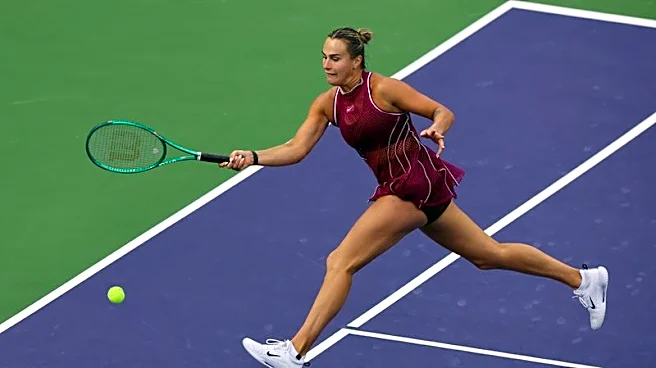
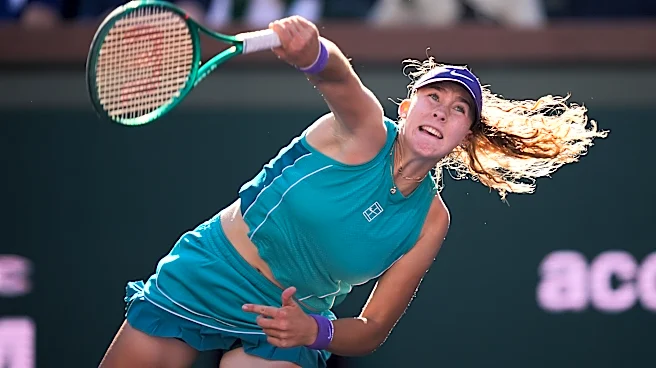
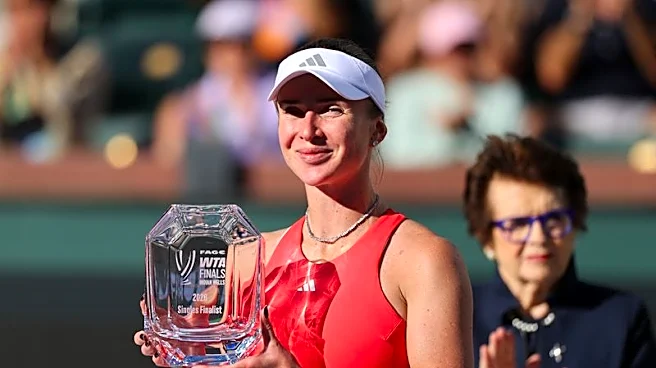
in Sabalenka's on-court demeanor, noting that the four-time Grand Slam champion now tends to adopt a negative mindset more quickly and for longer periods when matches don't go her way. Sabalenka had a strong start to 2026, completing the 'Sunshine Double' by winning Indian Wells and Miami, but failed to secure any further titles and finished the season ranked No. 3, losing her No. 1 ranking. Her season concluded with losses in five of her final seven matches, including a significant defeat to Mirra Andreeva where she lost 45 of the final 55 points.
Why It's Important?
Clijsters' insights highlight the critical role of mental fortitude in elite sports. Sabalenka's performance decline after a dominant start to the season, coupled with Clijsters' observations, suggests that even top athletes can be significantly impacted by psychological factors. This perspective is important for understanding the multifaceted nature of athletic success, where physical skill must be consistently supported by mental resilience. For Sabalenka, addressing these potential mental challenges will be crucial for her comeback in the 2027 season. The discussion also underscores the pressure and scrutiny faced by high-profile athletes, where every dip in form can lead to intense public and expert analysis, potentially exacerbating mental strain.
What's Next?
Sabalenka is entering an intriguing offseason, marked by changes in her coaching and support team, including parting ways with coach Max Mirny and physio Helen Murawska. These changes, combined with Clijsters' observations, suggest that Sabalenka will need to focus on both her physical and mental preparation to rediscover her best tennis. Her upcoming marriage in September 2027 and previously expressed desire to become a mother, as speculated by Clijsters, could also influence her priorities and approach to the sport. The tennis community will be closely watching her performance at the start of the 2027 season to see how she responds to these challenges and whether she can regain her dominant form.
Beyond the Headlines
Clijsters also raised the possibility that Sabalenka's personal life, specifically her upcoming marriage and potential family plans, could be a contributing factor to her current mindset. Drawing on her own experiences as a mother who returned to win Grand Slams, Clijsters speculated whether a 'strong maternal kind of feeling' might be influencing Sabalenka's focus and commitment to the 'all or nothing' mindset often required in elite tennis. While Clijsters emphasized this was speculative, it opens a broader conversation about how personal milestones and life changes intersect with professional athletic careers, particularly for female athletes. It highlights the complex balance between personal aspirations and the demanding nature of professional sports, and how these factors can subtly shift an athlete's motivation and performance.