




What's Happening?
Modern farmhouse living rooms are evolving to blend the warmth of traditional farmhouse aesthetics with cleaner, more contemporary design choices. This approach aims to prevent spaces from appearing dated while maintaining a comfortable and lived-in feel.
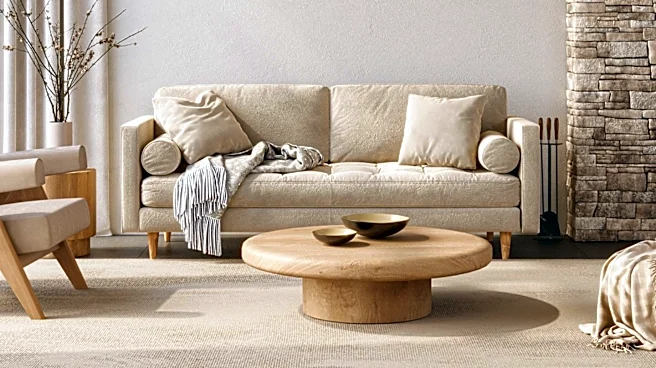
Key elements include the use of warm wood, comfortable furniture, and natural textures, integrated with modern lines and simpler decor. For instance, an open seating area can be defined by a narrow console behind the sofa, using wood that complements flooring and ceiling beams, often with baskets for storage. Bold contrasts are also being incorporated, such as a tall black fireplace wall against warm, neutral tones, balanced by white sectionals and pale rugs. Industrial wood, often with simple black metal bases, is being mixed with light, textured sofas to bridge rustic and modern styles. The overall goal is to achieve a balance where farmhouse warmth is present without an overabundance of rustic pieces that could make the room feel old-fashioned. This design philosophy extends to various elements like furniture, color palettes, and material choices, ensuring a fresh yet inviting atmosphere.
Why It's Important?
This shift in modern farmhouse design is significant for the U.S. interior design and home furnishings industries. It reflects a broader consumer preference for spaces that are both aesthetically pleasing and highly functional, moving away from overly themed or cluttered interiors. For homeowners, this trend offers a way to update their living spaces to feel current and sophisticated while retaining the comfort and charm associated with farmhouse style. This impacts purchasing decisions for furniture, decor, and building materials, favoring versatile pieces that can blend different styles. Manufacturers and retailers in the home goods sector must adapt by offering products that cater to this balanced aesthetic, such as clean-lined furniture that can be accessorized with natural wood or woven textures. The emphasis on durability and practicality, alongside visual appeal, also influences material selection, promoting items that can withstand daily use while contributing to a refined look. This evolution suggests a maturing of the farmhouse trend, making it more enduring and adaptable to diverse tastes.
What's Next?
The modern farmhouse trend is likely to continue evolving, with designers and homeowners further refining the balance between rustic and contemporary. Future developments may see an increased integration of sustainable materials and smart home technology within this aesthetic, maintaining the natural feel while enhancing functionality. We can anticipate more innovative uses of mixed materials, such as reclaimed wood paired with sleek metals or concrete, to create unique textures and visual interest. Color palettes might expand beyond traditional neutrals to include more muted, earthy tones or subtle pops of color, while still adhering to a calming and cohesive scheme. The demand for custom-built or artisanal pieces that embody this blend of styles is also expected to grow, as consumers seek unique items that reflect their personal taste. Retailers will likely expand their offerings to include more modular and adaptable furniture that can fit into various modern farmhouse interpretations, alongside curated collections of decor that emphasize quality over quantity. The focus will remain on creating personalized, comfortable, and stylish living environments that are both timeless and current.
Beyond the Headlines
Beyond the immediate aesthetic appeal, the evolution of modern farmhouse design reflects deeper cultural shifts in how Americans view their homes. It signifies a desire for authenticity and comfort in an increasingly fast-paced world, where the home serves as a sanctuary. The move away from overly rustic or themed decor suggests a rejection of superficiality in favor of genuine warmth and functionality. This design philosophy also subtly promotes mindful consumption, encouraging homeowners to invest in quality, versatile pieces that can stand the test of time rather than constantly chasing fleeting trends. Ethically, the emphasis on natural materials and durability can align with broader sustainability goals, encouraging the use of responsibly sourced wood and other eco-friendly options. Culturally, it represents a fusion of traditional American values of home and hearth with a modern appreciation for minimalism and clean design, creating a unique aesthetic that resonates with a wide demographic. This blend suggests a longing for connection to nature and heritage, interpreted through a contemporary lens.