





What's Happening?
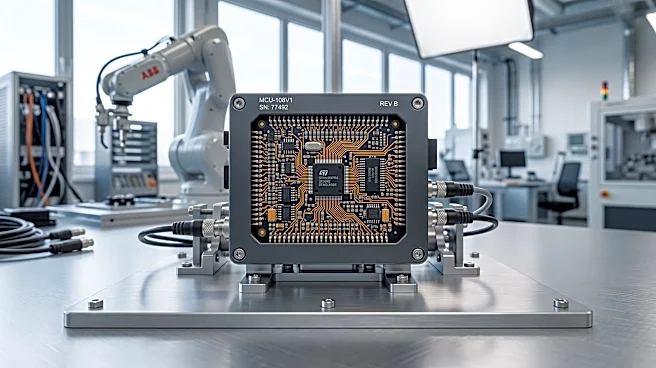
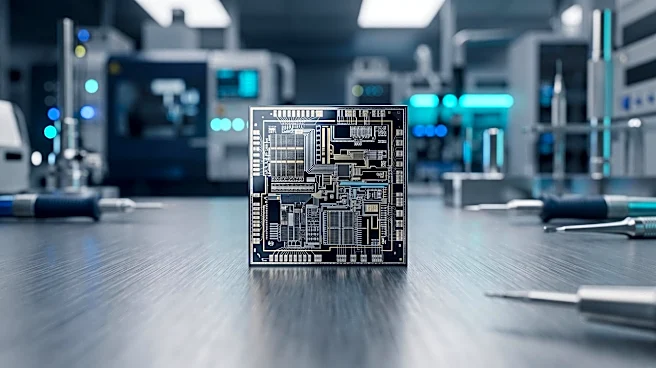
Elmos Semiconductor SE, in collaboration with AGIBOT, a Chinese robotics company, is showcasing the application of Elmos's integrated circuits (ICs) in humanoid robots at electronica 2026 in Munich. A key component highlighted is Elmos's Quantum Random
Number Generator (QRNG), which is being utilized in AGIBOT's wheeled robots. The QRNG provides random numbers essential for cryptographic processes, thereby bolstering the security of communications within these connected robotic systems. This integration is part of a broader effort by Elmos to adapt its automotive IC expertise, including solutions for motion, sensing, communication, and power supply, to the burgeoning field of robotics. The company anticipates that a single humanoid robot could incorporate over 120 Elmos ICs across its architecture, signaling a significant expansion of its market reach into humanoid robotics.
Why It's Important?
The integration of Quantum Random Number Generators into robotic systems marks a significant advancement in cybersecurity for autonomous machines. As robots become more prevalent and interconnected, particularly in sensitive applications, the need for robust and uncompromisable communication security becomes paramount. Traditional random number generators can be predictable, making them vulnerable to sophisticated attacks. QRNGs, by contrast, leverage quantum mechanics to produce truly random numbers, offering a higher level of security for cryptographic processes. This development is crucial for protecting data integrity, preventing unauthorized access, and ensuring the reliable operation of robots, which could range from industrial automation to service robots interacting with the public. For Elmos, this move into robotics represents a strategic diversification, leveraging its established automotive semiconductor technology to tap into a new, high-growth market, potentially setting a new standard for secure robotic communication.
What's Next?
Elmos Semiconductor SE and AGIBOT are presenting their collaborative efforts at electronica 2026, demonstrating the practical applications of Elmos's ICs in humanoid robots. This showcase is expected to highlight the potential for widespread adoption of these technologies in the robotics sector. Current studies project substantial long-term market potential for humanoid robots, which is anticipated to drive a significant increase in demand for specialized semiconductors. Elmos views humanoid robotics as a natural extension of its expertise in analog mixed-signal semiconductor solutions, positioning itself for additional long-term growth. The ongoing development and integration of advanced ICs like the QRNG will likely continue, with a focus on enhancing the security, efficiency, and functionality of future robotic platforms.
Beyond the Headlines
The adoption of Quantum Random Number Generators in robotics extends beyond mere technical enhancement; it touches upon critical ethical and societal implications. As robots gain more autonomy and interact more closely with humans and critical infrastructure, their security becomes a matter of public trust and safety. A compromise in a robot's communication could lead to malfunctions, data breaches, or even malicious control, posing risks to individuals and systems. By integrating QRNGs, the industry is proactively addressing these concerns, aiming to build inherently more secure and trustworthy robotic platforms. This trend could accelerate the development of industry standards for robotic cybersecurity, influencing regulatory frameworks and fostering greater public acceptance of advanced robotic technologies. The move also underscores a broader shift towards quantum-safe technologies across various sectors, anticipating future threats from quantum computing capabilities.