








What's Happening?
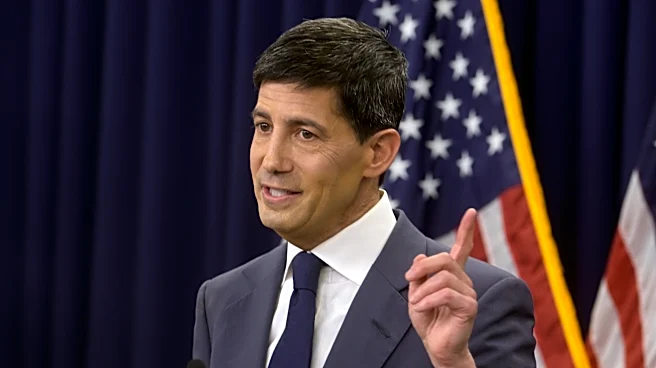
The Federal Reserve's decision to maintain interest rates under new Chairman Kevin Warsh led to a decline in the S&P 500, as markets reacted to potential future rate hikes. Warsh's first meeting as chairman introduced a shift in the Fed's communication
strategy, with a focus on real-time data and reduced forward guidance. The Fed's dot-plot projections indicated a possible rate increase by 2026, contributing to market uncertainty. Warsh announced the formation of task forces to review key areas such as Fed communications, balance sheet policy, and inflation frameworks, aiming to modernize the Fed's approach.
Why It's Important?
Warsh's leadership marks a significant shift in the Fed's approach to monetary policy, with potential implications for financial markets and the broader economy. The focus on real-time data and reduced forward guidance may lead to increased market volatility, as investors adjust to less predictable Fed actions. The potential rate hike reflects confidence in economic growth but also raises concerns about inflation and borrowing costs. Warsh's task forces could lead to substantial changes in the Fed's operations, impacting how the central bank manages economic challenges.
What's Next?
The task forces will conduct comprehensive reviews of the Fed's key areas, with findings expected by the end of the year. These reviews could lead to significant policy shifts, affecting how the Fed manages economic challenges. Market participants will be closely monitoring these developments, as they could influence future interest rate decisions and economic stability. Warsh's leadership will be tested as he navigates these changes and their impact on the Fed's dual mandate of price stability and maximum employment.