




What's Happening?
The screenplay for the iconic 1985 film "Back to the Future," written by Robert Zemeckis and Bob Gale, was rejected more than 40 times by various studios between 1981 and 1984. This period of repeated rejections left Zemeckis feeling "depressed and worried
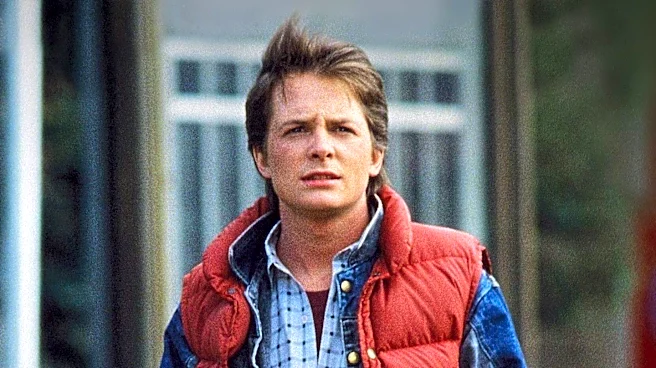
that my career was over," as revealed in a new foreword to Gale's book, "Back to the Future: The Complete Screenplay." Even after Steven Spielberg helped secure a deal with Universal Pictures, the production faced further challenges. Studio president Sid Sheinberg initially disliked the title and proposed renaming the film "Spaceman From Pluto," a suggestion that Spielberg ultimately overruled. Additionally, the original lead actor, Eric Stoltz, was replaced by Michael J. Fox five to six weeks into filming, a decision Zemeckis personally delivered due to concerns about the fit for the role. The book, published by Insight Editions, offers a detailed look into these early struggles, combining the complete script with Gale's commentary and Zemeckis's candid reflections.
Why It's Important?
This revelation highlights the often-unseen struggles behind successful creative projects in Hollywood, demonstrating that even now-classic films can face significant initial resistance. The story of "Back to the Future's" numerous rejections underscores the subjective and often challenging nature of the film industry's decision-making process. It also emphasizes the perseverance required by filmmakers to bring their visions to the screen. The intervention of influential figures like Steven Spielberg in protecting the film's original title and securing its production illustrates the critical role that established industry players can have in championing innovative projects. The mid-production recasting of the lead role further exemplifies the high-stakes environment of filmmaking, where creative and commercial considerations can lead to significant personnel changes even after filming has commenced, ultimately shaping the final product and its cultural impact.
What's Next?
The release of "Back to the Future: The Complete Screenplay" with new insights from Robert Zemeckis and Bob Gale is expected to generate renewed interest in the film's production history. Fans and film enthusiasts will likely delve into the detailed accounts of the script's journey and the challenges faced during its development and filming. This could lead to further discussions and analyses within film studies and fan communities about the creative process, studio interference, and the impact of key decisions on a film's legacy. The book's availability, including a limited run of 500 copies, suggests it will become a valuable resource for understanding the origins of a cultural phenomenon. Future retrospectives or documentaries about the film may incorporate these newly revealed details, offering a more complete picture of its creation.
Beyond the Headlines
The narrative of "Back to the Future's" difficult path to production offers a broader commentary on the nature of innovation and risk-taking in creative industries. It challenges the perception that successful projects are always immediately recognized for their potential, instead illustrating that groundbreaking ideas often face skepticism and numerous obstacles. The studio's initial desire to change the title to "Spaceman From Pluto" reflects a common industry tendency to favor perceived marketability over creative integrity, a tension that continues to exist in Hollywood. Furthermore, the decision to replace Eric Stoltz with Michael J. Fox mid-production, while controversial at the time, ultimately proved to be a pivotal choice that defined the film's iconic character and tone, highlighting the delicate balance between artistic vision and practical execution in filmmaking. This story serves as a testament to the resilience of creators and the often unpredictable journey of cultural touchstones.