






What's Happening?
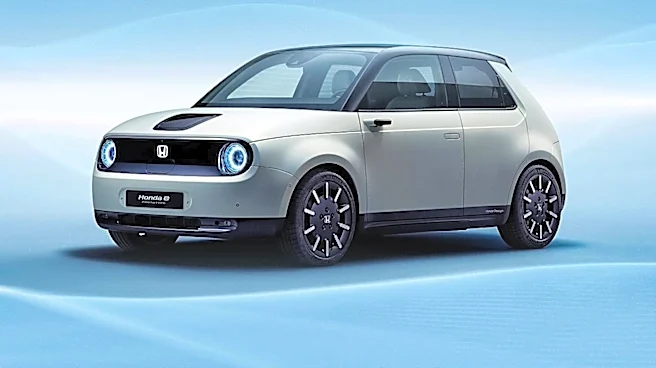
Honda has announced a strategic pivot towards energy storage systems, redirecting its battery production from electric vehicles (EVs) to data centers. This decision follows the cancellation of Honda's EV programs in the US, attributed to a softening demand
for EVs after the GOP's cancellation of tax credits. The automaker's joint venture with LG Energy Solution in Ohio will now focus on producing batteries for stationary storage, a market experiencing significant growth. Honda's shift comes amid a broader industry trend where automakers are exploring battery production as a standalone business, driven by the increasing demand for energy storage solutions.
Why It's Important?
Honda's move reflects the challenges faced by automakers in the US EV market, particularly in the absence of federal tax incentives. The pivot to energy storage highlights the growing importance of this sector, which is expected to see continued expansion as more industries seek sustainable energy solutions. By focusing on energy storage, Honda aims to capitalize on a profitable and rapidly growing market, potentially offsetting losses from its EV segment. This strategic shift may also influence other automakers to explore similar opportunities, reshaping the landscape of the automotive and energy industries.
What's Next?
Honda's focus on energy storage is likely to drive further investments in this area, potentially leading to advancements in battery technology and production capabilities. The company may also explore partnerships and collaborations to enhance its position in the energy market. As the demand for energy storage continues to rise, Honda's ability to innovate and adapt to market needs will be crucial for its long-term success. The shift may also prompt other automakers to reassess their strategies and explore new business models in response to changing market dynamics.