








What's Happening?
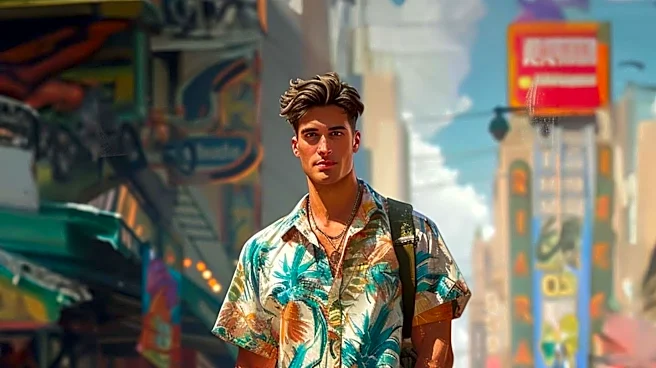
Filmmaker Paul Schrader has announced that his long-developing South Central crime noir, 'Three Guns At Dawn,' will be made entirely with AI-generated characters instead of traditional actors. Schrader, a vocal enthusiast for artificial intelligence in filmmaking,
clarified his plans in an interview with The Hollywood Reporter, stating the film will be 'all AI' and populated by 'AI-generated human prototypes.' The project, which centers on three Black brothers—a corrupt cop, a drug dealer, and a serial killer—has undergone significant reconfiguration since its initial conception. Antoine Fuqua, who was previously attached as a producer, is no longer involved. Schrader views the increasing role of generative AI in filmmaking as inevitable and dismisses concerns about job displacement, stating, 'Those jobs are gone, babe.' He also plans to incorporate about 15 minutes of AI into another upcoming film, 'The Doors Of Perception,' which will feature psychedelic trip sequences.
Why It's Important?
This development is highly significant for the film industry as it represents a pioneering move by a veteran filmmaker to fully embrace AI for character generation in a feature film. Schrader's decision could serve as a major test case for the viability and artistic potential of AI-driven cinema, potentially influencing how future productions approach casting and visual effects. If successful, 'Three Guns At Dawn' could accelerate the adoption of AI technologies, leading to profound shifts in production costs, creative processes, and the traditional roles of actors and crew. Conversely, if it faces artistic or technical challenges, it could highlight the limitations of current AI capabilities. The project also intensifies the ongoing debate within Hollywood about AI's impact on creative jobs and the future of human artistry in filmmaking, with Schrader's stance directly challenging industry anxieties.
What's Next?
The production of 'Three Guns At Dawn' will be closely watched by the film industry, technology developers, and audiences alike. Key next steps will involve the technical execution of creating believable and compelling AI-generated characters, as well as the overall artistic direction of the film. The reception of the film upon its release will be crucial in determining the broader acceptance and future trajectory of AI in mainstream cinema. If the film proves to be a critical and commercial success, it could inspire other filmmakers to explore similar AI-centric approaches. Conversely, if it struggles, it might temper expectations for the immediate widespread adoption of fully AI-generated casts. The project will also likely fuel further discussions and policy debates within guilds and unions regarding the use of AI and its implications for employment in the entertainment sector.
Beyond the Headlines
Beyond the immediate production and industry impact, Schrader's project raises profound ethical, philosophical, and cultural questions. The use of AI-generated 'human prototypes' instead of human actors challenges fundamental notions of performance, authenticity, and the human element in storytelling. It could lead to discussions about the nature of art itself when the 'performer' is an algorithm. Ethically, it opens doors to debates about digital rights, ownership of AI-generated likenesses, and the potential for AI to perpetuate biases present in its training data. Culturally, if AI-generated actors become commonplace, it could alter audience perceptions of celebrity, empathy with characters, and the very experience of watching films. This venture could mark a significant step towards a future where the line between human and artificial creativity in entertainment becomes increasingly blurred, prompting a re-evaluation of what it means to create and consume cinematic art.