








What's Happening?
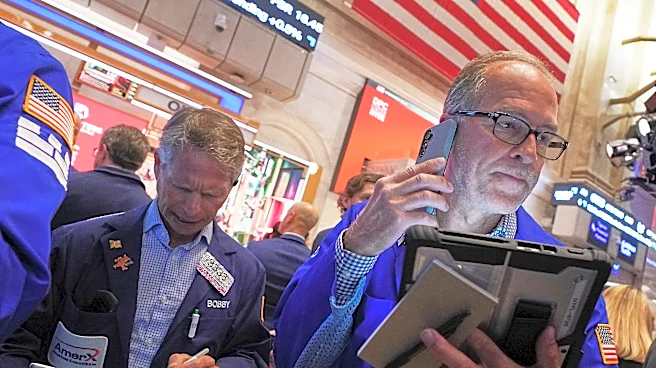
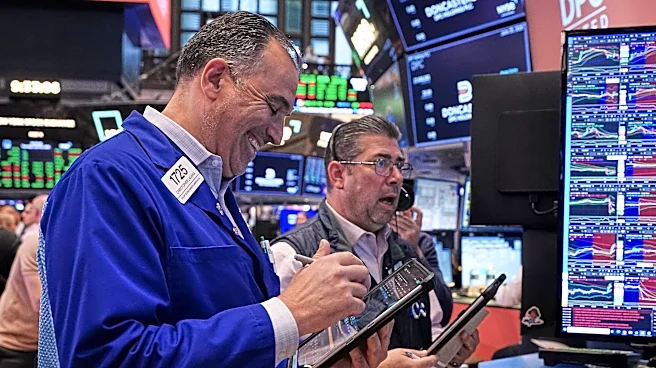
U.S. stock index futures experienced a significant decline on Friday, marking a second consecutive day of losses on Wall Street. This downturn is attributed to investor concerns over high technology valuations, particularly following disappointing corporate
updates related to artificial intelligence spending. As of early Friday morning, S&P 500 futures had dropped by 0.9%, Nasdaq 100 futures fell by 1.7%, and Dow Jones futures decreased by 0.6%. The technology sector, which has been under pressure, saw further declines after IBM's recent revenue miss heightened fears that AI infrastructure spending is overshadowing traditional software investments. Netflix shares fell 9.3% in premarket trading due to weaker-than-expected third-quarter guidance, despite a modest earnings beat. Intuitive Surgical's shares also dropped over 12% after maintaining a conservative growth outlook for its da Vinci robotic surgery platform, which disappointed investors.
Why It's Important?
The decline in U.S. stock futures highlights the ongoing volatility in the technology sector, which has been a significant driver of market performance. The reassessment of technology valuations, particularly in the context of AI spending, suggests a potential shift in investment priorities that could impact the broader market. Companies like Netflix and Intuitive Surgical, which have been leaders in their respective fields, are facing increased scrutiny from investors who are concerned about growth sustainability and market dynamics. This situation underscores the delicate balance between innovation-driven growth and financial performance, which is crucial for maintaining investor confidence. The broader implications for the U.S. economy include potential shifts in investment strategies and the need for companies to adapt to changing market expectations.
What's Next?
Investors and market analysts will likely continue to monitor corporate earnings reports and guidance closely, particularly from major technology firms, to gauge the impact of AI spending on traditional business models. Companies may need to adjust their strategies to address investor concerns and demonstrate sustainable growth. Additionally, any changes in U.S. insurance plans affecting medical technology demand could have broader implications for the healthcare sector. Stakeholders will be watching for policy developments and corporate responses that could influence market trends in the coming months.