







What's Happening?
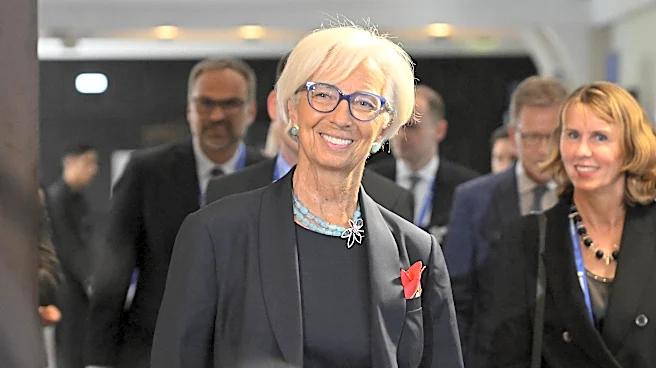
Christine Lagarde has issued a stark warning regarding the financial implications of climate change, asserting that this summer's extreme heat events should be viewed as a warning rather than an anomaly. She highlighted that while immediate economic damage
from heat waves, droughts, and wildfires has been modest, the associated costs are escalating, and future climate shocks could be more severe. Lagarde pointed out that nearly three-quarters of euro-area companies depend on at least one nature-based service, making them vulnerable to climate-related disruptions. She noted that output in affected regions remains down by approximately 1.5% two years after a heat wave and about 3% four years after a drought. Lagarde outlined three key priorities for Europe to address both the direct destruction caused by climate events and the energy-related transmission channels of their impact. Her remarks come as she prepares to leave the European Central Bank (ECB) in February, earlier than scheduled, to speak more broadly on issues beyond monetary policy.
Why It's Important?
Lagarde's warning underscores the growing recognition among financial leaders of climate change as a systemic risk to the global economy, including potential indirect impacts on the US through interconnected markets. Her emphasis on the broad dependency of businesses on nature-based services highlights a vulnerability that could lead to significant economic disruptions, affecting supply chains, production, and ultimately, corporate profitability. For investors, this message signals the need to integrate climate risk into financial modeling and portfolio management, particularly by mapping revenue streams tied to climate-vulnerable regions and assessing how energy flexibility influences margin risk. The long-term, region-specific drags on output following climate shocks, coupled with energy system vulnerabilities, suggest that climate change will increasingly influence growth, credit, and collateral assessments. This perspective encourages a shift towards more sustainable investment strategies and greater scrutiny of companies' climate resilience, potentially influencing capital allocation decisions and driving demand for green finance solutions globally.
What's Next?
Following Lagarde's pronouncements, there is likely to be increased pressure on European policymakers and businesses to accelerate climate adaptation and mitigation strategies. This could translate into new regulations, incentives for green investments, and enhanced climate risk disclosure requirements for companies. Central banks, including those in the US, may further integrate climate change considerations into their economic analyses and financial stability frameworks, potentially influencing monetary policy decisions and banking supervision. For investors, the focus will intensify on identifying companies with robust climate resilience strategies and those contributing to climate solutions. The financial sector may see a continued expansion of climate-related financial products and services, as well as more sophisticated tools for assessing and pricing climate risk. The broader implication is a continued shift towards a more climate-conscious global financial system, with potential ripple effects on international trade and investment flows.
Beyond the Headlines
Lagarde's departure from the ECB to focus on broader issues, including climate change, signifies a growing trend among influential figures to advocate for climate action beyond traditional institutional roles. This move highlights the urgency and cross-sectoral nature of the climate crisis, positioning it not just as an environmental issue but as a fundamental economic and financial challenge. The concept of 'nature-based services' as critical to business operations underscores the often-underestimated economic value of ecosystems and biodiversity, suggesting a need for more holistic economic models that account for natural capital. This perspective could drive a deeper integration of ecological principles into corporate strategy and public policy, moving beyond carbon emissions to broader environmental impacts. The long-term implications include a potential re-evaluation of economic growth paradigms, emphasizing resilience and sustainability over short-term gains, and fostering a more integrated approach to environmental and financial governance globally.