


What's Happening?
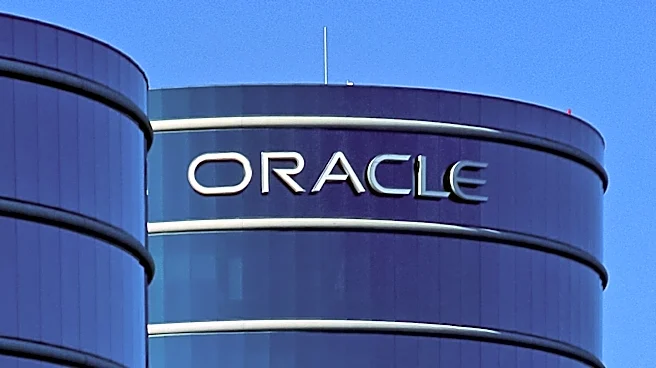
Larry Ellison, cofounder of Oracle, experienced a significant drop in his net worth, losing $10.9 billion by the close of markets last Friday. This decline, according to the Bloomberg Billionaires Index, resulted in his removal from the top 10 richest
billionaires list. Oracle's stock fell approximately 7.5% to around $102, marking its lowest point since January 2024, and has seen a 47% year-over-year slide. The company's stock had peaked at $345 in September 2025 due to high demand for AI computing power. However, investor concerns have grown over Oracle's substantial AI infrastructure spending, increasing debt, and negative free cash flow. As Ellison owns about 40% of Oracle, these financial shifts directly impact his personal wealth. Despite the recent loss, Ellison's net worth remains at $139 billion.
Why It's Important?
This event highlights the volatility inherent in the wealth of tech billionaires, whose fortunes are largely tied to company stock performance. The substantial drop in Larry Ellison's net worth reflects broader investor apprehension regarding Oracle's financial strategies, particularly its heavy investment in AI infrastructure and its impact on debt and cash flow. This could signal a shift in how investors perceive the long-term viability and profitability of aggressive AI expansion strategies within established tech companies. For the U.S. economy, fluctuations in major tech stocks like Oracle can influence market sentiment and investor confidence in the technology sector. It also underscores the rapid shifts in wealth rankings among the ultra-rich, demonstrating how quickly market dynamics can alter individual financial standing, even for those with immense wealth.
What's Next?
The immediate future for Oracle will likely involve continued scrutiny from investors regarding its AI infrastructure spending and its impact on the company's financial health. Oracle may need to provide clearer guidance or demonstrate tangible returns on its AI investments to regain investor confidence and stabilize its stock price. The company's next quarterly earnings report will be a critical juncture, as it will offer insights into whether concerns about debt and free cash flow are being addressed. For Larry Ellison, his net worth will continue to fluctuate with Oracle's stock performance, and his position on global wealth rankings will remain subject to market movements. The broader tech industry will also be watching to see if Oracle's challenges with AI infrastructure spending are an isolated incident or a precursor to similar issues for other companies heavily investing in AI.
Beyond the Headlines
Beyond the immediate financial implications, this situation underscores the inherent risks associated with rapid technological shifts and large-scale investments in emerging fields like AI. While AI promises significant future growth, the substantial capital expenditure required and the time lag before profitability can create short-term financial pressures that concern investors. This scenario could prompt a re-evaluation of investment strategies within the tech sector, potentially leading to more cautious approaches to AI infrastructure development. It also highlights the concentration of wealth in the hands of a few individuals whose fortunes are inextricably linked to the performance of their companies, making them highly susceptible to market sentiment and economic shifts. The 'second thoughts' around Oracle's cloud deal with OpenAI, as mentioned by a U.C. Berkeley economist, suggest a deeper market skepticism about the immediate returns or strategic soundness of certain high-profile AI partnerships.