






What's Happening?
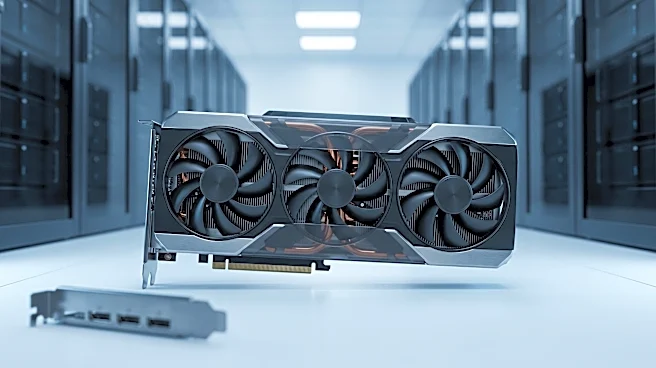
New leaks suggest that Nvidia may be discontinuing its flagship gaming graphics card, the RTX 5090. GPU leaker zed__wang reported on X/Twitter that there would be "no more GB202 for 5090," indicating that all future supplies of the GB202 GPU die, which
powers the RTX 5090, will be exclusively allocated to RTX Pro series cards. The GB202 die is also used in nine distinct workstation and data center GPUs, which are significantly more expensive than the RTX 5090. Nvidia has not officially commented on these rumors, and similar past rumors about other RTX cards proved false. However, Nvidia has openly prioritized its AI and data center divisions over gaming, even removing gaming from its earnings reports.
Why It's Important?
If confirmed, the discontinuation of the RTX 5090 would significantly impact the high-end gaming PC market and potentially shift Nvidia's focus further towards professional and AI computing. This move would underscore Nvidia's strategic pivot towards more lucrative markets, where profit margins are higher. For consumers, it would mean even greater scarcity and higher prices for top-tier gaming GPUs, as the RTX 5090's price has already skyrocketed since its launch. This could also affect manufacturers of prebuilt gaming PCs that rely on these high-end components. The broader implication is a potential widening gap between consumer-grade and professional-grade hardware, with gaming enthusiasts facing increasing challenges in accessing cutting-edge GPU technology.
What's Next?
The immediate next step is to await an official statement from Nvidia regarding the status of the RTX 5090. Without confirmation, the situation remains speculative, though the trend of prioritizing data center components is clear. If the discontinuation is true, consumers can expect existing stock of the RTX 5090 to become even more expensive and scarce. This could also accelerate the demand for alternative high-end GPUs from competitors or push gamers towards slightly lower-tier cards. Nvidia's future product roadmap for gaming GPUs will be closely watched, especially given rumors of next-generation cards not launching until 2028, which could exacerbate the current supply and pricing issues in the high-end market.
Beyond the Headlines
This reported discontinuation highlights a significant shift in the technology industry, where the immense demand for AI and data center processing power is directly impacting the consumer market. Nvidia's strategic decisions reflect a broader economic reality where the profitability of enterprise solutions often outweighs that of consumer products. This trend could lead to a future where top-tier GPU technology is primarily developed and priced for professional applications, with gaming benefiting from trickle-down technology rather than being the primary driver of innovation. It also raises questions about the long-term accessibility of cutting-edge hardware for PC gamers and the potential for market consolidation or diversification among GPU manufacturers as they adapt to these evolving priorities.