







What's Happening?
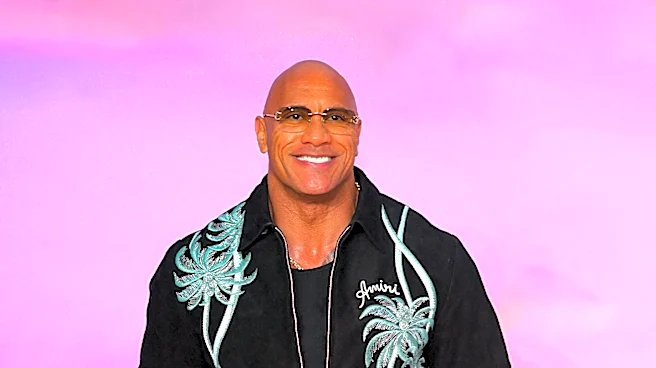
Dwayne Johnson's live-action remake of Disney's 'Moana' has underperformed at the box office, opening with $43 million in North America against a $250 million production budget. The film is projected to result in a loss of $100 million to $125 million for the studio.
Johnson, reprising his role as the demigod Maui, was reportedly paid nearly $30 million for his involvement as both star and producer. This marks another commercial disappointment for Johnson, who has experienced a series of flops despite being one of Hollywood's highest-paid actors. The film's poor performance is attributed to the short interval since the original animated film and the release of 'Moana 2' just two years prior.
Why It's Important?
The financial failure of the 'Moana' remake highlights a shift in Hollywood's economic landscape, where star power is no longer a guaranteed predictor of box office success. This trend suggests that studios may need to reconsider their compensation structures, moving away from large upfront payments to performance-based incentives. The industry's reliance on established intellectual properties and the changing dynamics of consumer demand in the streaming era further complicate traditional models of actor compensation. This development could lead to a reevaluation of how studios manage risk and budget for blockbuster films.
What's Next?
Studios may begin to adopt more flexible compensation models that align actor incentives with a film's financial performance. This could involve a greater emphasis on profit-sharing arrangements, as seen with actors like Tom Cruise and Margot Robbie, who have successfully negotiated backend participation deals. For Johnson, upcoming projects like 'Jumanji: Open World' will test whether his star power can still draw audiences. The industry will be closely watching how studios balance the need for star-driven projects with the financial realities of modern filmmaking.