







What's Happening?
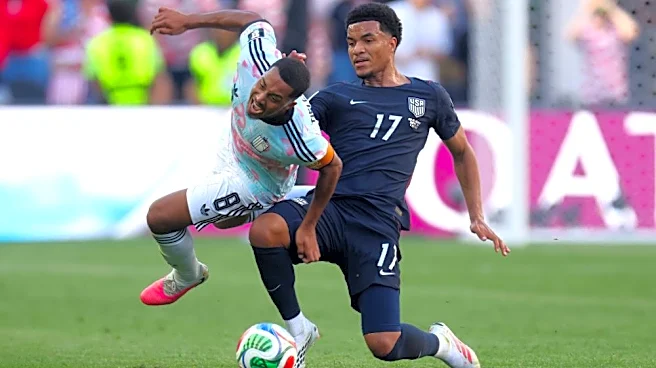
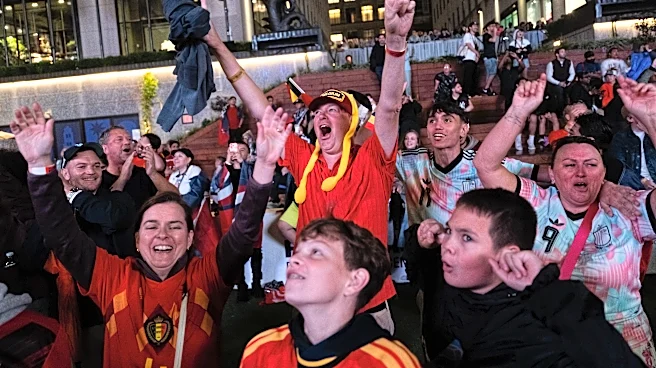
The United States men's national soccer team has set new records for television viewership in the U.S. during the World Cup. According to Nielsen Media research, the team's round of 16 match against Belgium attracted 33.086 million viewers, peaking at 41.033
million. This match became the most-watched soccer telecast in U.S. history, surpassing the previous record set during the team's round of 32 victory over Bosnia and Herzegovina, which drew 26.4 million viewers. Additionally, the Mexico-England match in the round of 16 also set a record as the most-watched non-USMNT World Cup telecast in English-language U.S. history, with 21.742 million viewers on Fox. When combined with audiences from Telemundo and Peacock, the match averaged 44.84 million viewers.
Why It's Important?
These viewership records highlight the growing popularity of soccer in the United States, particularly during major international tournaments like the World Cup. The significant audience numbers indicate a strong interest in the sport, which could lead to increased investment in soccer infrastructure and development programs across the country. The high viewership also underscores the potential for lucrative advertising and broadcasting deals, benefiting networks like Fox and platforms like Telemundo and Peacock. This trend may encourage more U.S. networks to invest in soccer broadcasting rights, further promoting the sport domestically.
What's Next?
With the increasing popularity of soccer in the U.S., stakeholders such as sports networks, advertisers, and soccer organizations may seek to capitalize on this momentum. Networks might pursue more aggressive bidding for future World Cup broadcasting rights, while advertisers could target soccer events for marketing campaigns. Soccer organizations in the U.S. may also focus on expanding youth programs and improving facilities to nurture local talent, aiming to enhance the national team's performance in future tournaments. Additionally, the success of these broadcasts could influence the scheduling and marketing strategies for upcoming soccer events in the U.S.