





What's Happening?
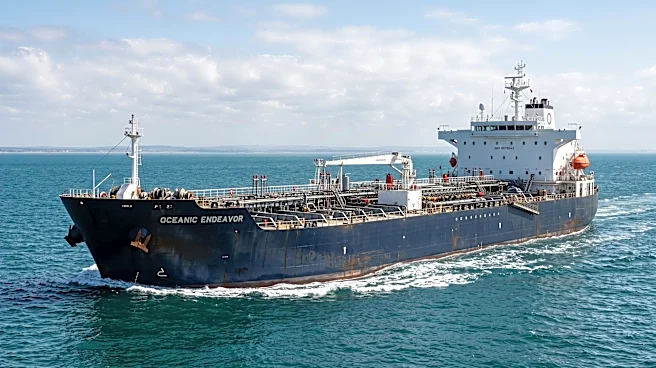
Greek tanker owner JHI Steamship, led by John Inglessis, has placed an order for two 50,000 DWT MR2 product tankers with South Korean shipbuilder K Shipbuilding. The delivery of these new vessels is anticipated in the first quarter of 2029. The financial
details of this contract have not been disclosed. This recent order marks JHI Steamship's second newbuild program with K Shipbuilding. Previously, the company contracted for two 115,000 DWT Aframax/LR2 tankers with an option for a third, which has since been exercised, bringing that series to three vessels. The newly ordered MR2 units are not yet listed on JHI Steamship's official fleet. The MR2 product tanker newbuilding market has shown significant activity in 2026, with Xclusiv Shipbrokers reporting 190 global MR2 orders as of late October, making it the most ordered tanker type this year, surpassing VLCCs. This expansion brings JHI Steamship's total orderbook to nine vessels, including Suezmax tankers from HD Hyundai Samho, a VLCC from Hanwha Ocean, and an Aframax/LR2 from Imabari Shipbuilding.
Why It's Important?
This order signifies JHI Steamship's strategic expansion and modernization of its fleet, particularly in the MR2 product tanker segment, which is currently experiencing high demand. The investment in new vessels reflects a long-term outlook on global shipping needs and potential growth in product tanker markets. For K Shipbuilding, securing this repeat order from JHI Steamship reinforces its position as a competitive player in the mid-sized shipbuilding sector, indicating confidence in its capabilities and delivery timelines. The broader trend of increased MR2 tanker orders, as highlighted by Xclusiv Shipbrokers, suggests a robust demand for refined petroleum product transportation globally. This could indicate anticipated growth in energy consumption or shifts in refining capacities, requiring more efficient and modern vessels for distribution. Such investments by shipping companies contribute to the global maritime economy, influencing trade routes, logistics, and the overall supply chain for petroleum products.
What's Next?
The construction of the two MR2 product tankers will proceed at K Shipbuilding, with delivery scheduled for the first quarter of 2029. JHI Steamship will integrate these new vessels into its operational fleet, enhancing its capacity for transporting refined petroleum products. The company will likely continue to monitor market conditions and potentially place further orders as part of its fleet renewal and expansion strategy. The ongoing high activity in the MR2 newbuilding market suggests that other shipping companies may also continue to invest in similar vessel types, potentially leading to further orders for shipyards globally. This trend will be closely watched by industry analysts to gauge future supply and demand dynamics in the tanker market, which could influence freight rates and operational strategies for shipping companies worldwide. The successful delivery and integration of these vessels will be a key milestone for JHI Steamship's operational capabilities.
Beyond the Headlines
The continuous investment in new shipbuilding, particularly in specific vessel types like MR2 product tankers, reflects underlying global economic and energy trends. The high volume of MR2 orders could indicate a strategic shift in global energy logistics, possibly driven by changes in refinery locations, increased demand for refined products in certain regions, or the need for more fuel-efficient and environmentally compliant vessels. This trend also highlights the competitive landscape of the shipbuilding industry, where South Korean yards like K Shipbuilding continue to secure significant contracts. The long lead times for vessel delivery, extending to 2029 in this case, underscore the capital-intensive and long-term planning nature of the shipping industry. Furthermore, the expansion of fleets by companies like JHI Steamship contributes to the broader discussion on maritime emissions and the eventual transition to greener shipping, as newer vessels often incorporate more advanced, albeit not always fully green, technologies.