






What's Happening?
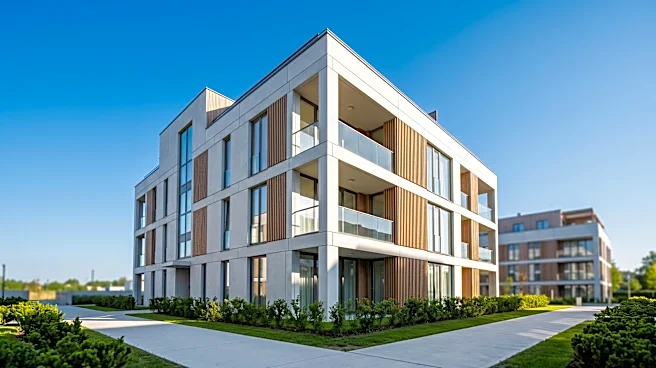
Airbnb has announced the launch of its Housing Accelerator, a new initiative backed by an initial $250 million investment aimed at tackling the national housing crisis. This program seeks to unlock $5 billion in capital investments over the next decade
by providing 'last-dollar' financing for rental housing developments. These are projects that have cleared most regulatory hurdles but lack the final funding to begin construction. Airbnb CEO Brian Chesky stated that the company was founded due to housing affordability issues, and this initiative is a significant step towards contributing to solutions. The company estimates that approximately 750,000 housing units across the U.S. are in this stalled state. The Housing Accelerator will prioritize affordable and mixed-income housing projects, accepting returns significantly below standard market rates. The first investment under this program is $6.4 million for 201 affordable housing units in Austin, Texas, as part of the larger St. John redevelopment project, which will include over 500 units, retail, and public spaces.
Why It's Important?
This initiative is significant as it marks a substantial commitment from a major tech company to directly address a critical national issue: housing affordability. Airbnb, which has often faced criticism for its perceived role in exacerbating housing shortages in some urban areas, is now positioning itself as part of the solution. By focusing on 'last-dollar' financing, the program targets a specific bottleneck in housing development, potentially enabling numerous projects to move forward that would otherwise remain stalled. This could lead to a tangible increase in housing supply, particularly affordable and mixed-income units, in communities across the U.S. The investment also signals a potential shift in corporate responsibility, with companies taking more direct action on societal challenges. For cities like Austin, the immediate impact is the acceleration of much-needed affordable housing, demonstrating a model that could be replicated elsewhere.
What's Next?
Following the initial investment in Austin, Airbnb plans to expand the Housing Accelerator's reach, inviting developers, non-profits, and community organizations to submit potential investment opportunities. The company will also engage in policy advocacy, supporting community leaders pushing for pro-housing reforms such as changes to zoning, permitting, and building codes to make construction less expensive and faster. Later this year, Airbnb will release the 'Airbnb City Index,' an annual dataset designed to provide insights into housing policies and outcomes globally, covering metrics like housing additions per capita and affordability. Additionally, Airbnb intends to launch a $5 million Housing Innovation Prize, offering five $1 million awards to innovators developing technologies and designs that make home construction easier, faster, and cheaper. These next steps indicate a multi-faceted approach combining capital, policy, and innovation to address the housing crisis.
Beyond the Headlines
Beyond the immediate financial investment, Airbnb's Housing Accelerator could have broader implications for the relationship between tech companies, urban development, and social responsibility. This move could be seen as an attempt by Airbnb to mitigate negative perceptions and proactively engage with cities that have previously imposed strict regulations on short-term rentals. It highlights a growing trend where private sector entities, often under public pressure, are stepping into roles traditionally dominated by government or non-profits to address complex social issues. The initiative also underscores the potential for innovative financing models to bridge gaps in critical infrastructure development. If successful, this program could set a precedent for other companies to invest directly in community development, potentially fostering new public-private partnerships and influencing future urban planning strategies to create more inclusive and affordable housing markets.